
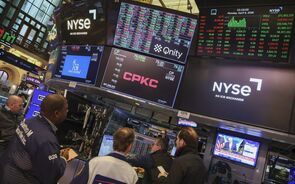

Recessão ou abrandamento
É verdade que há um conflito forte entre sentimentos positivo e negativo, algo que se traduz por recessão ou arrefecimento.
Não devemos acreditar nos "permabulls" (CNBC) ou nos "permabears" (tipo Rob McHugh que defende a queda no mercado há já 3 anos).
Acreditem na vossa própria análise com mente aberta. Lembrem-se sempre de que às vezes o que parece... é !!
Simples, como a teoria da lâmina de Occam.
Se há indicadores que mostram fraqueza em vários campos, então temos que aceitar que vêm aí momentos mais complexos, com quedas à mistura... recuperações, quedas, recuperações, um ambiente semelhante a 1994/95 (ou quase até 97/98, mas aqui sem recessão no Ocidente), que ainda assim não deve comprometer a continuação do crescimento económico global e a consolidação e força dos mercados.
Continuo a acreditar que há e haverá liquidez para manter o sistema em relativa boa forma ainda por uns anos, embora de uma forma menos exuberante.
No meio deste optimismo relativo, acredito em problemas mais duradouros nos mercados imobiliários em várias partes do globo. Isto entre uma ou outra coisinha que ainda é cedo para falar...
Abraço
djovarius
Não devemos acreditar nos "permabulls" (CNBC) ou nos "permabears" (tipo Rob McHugh que defende a queda no mercado há já 3 anos).
Acreditem na vossa própria análise com mente aberta. Lembrem-se sempre de que às vezes o que parece... é !!
Simples, como a teoria da lâmina de Occam.
Se há indicadores que mostram fraqueza em vários campos, então temos que aceitar que vêm aí momentos mais complexos, com quedas à mistura... recuperações, quedas, recuperações, um ambiente semelhante a 1994/95 (ou quase até 97/98, mas aqui sem recessão no Ocidente), que ainda assim não deve comprometer a continuação do crescimento económico global e a consolidação e força dos mercados.
Continuo a acreditar que há e haverá liquidez para manter o sistema em relativa boa forma ainda por uns anos, embora de uma forma menos exuberante.
No meio deste optimismo relativo, acredito em problemas mais duradouros nos mercados imobiliários em várias partes do globo. Isto entre uma ou outra coisinha que ainda é cedo para falar...
Abraço
djovarius
Cuidado com o que desejas pois todo o Universo pode se conjugar para a sua realização.
-

- Mensagens: 9473
- Registado: 10/11/2002 19:32
- Localização: Planeta Algarve
17:39
Strategy: Greenspan reiterating his views on subprime mortgages and the US economy in general: says subprime not a small issue, says if prices go down, subprime problems may spread. Also, he says it's remarkable that housing slump hasn't hit spending (yet).
17:42
Equity Strategy: Greenspan still got what it takes to move the market, S&P 500 drops 7 points in minutes as he again warns on subprime mortgages and housing slump's impact on broader economy. Financials pull back notably.
-

- Mensagens: 3299
- Registado: 8/2/2006 17:32
Credit Suisse, on the other hand, says stocks to weather subprime crisis.
"The key to whether or not fears of an economic recession and a far more severe correction in equity markets materialize rests on the shape of the labor market and the corporate sector, and here we are more optimistic."
-
- Mensagens: 3299
- Registado: 8/2/2006 17:32
Merrill Lynch banging the Recession drum today, a note from the bank says housing price declines may set off a US recession.
"Even if the pullback is only aimed at the subprime market, there could well be potentially significant further drags on home prices, construction activity and of course consumer spending growth."
-
- Mensagens: 3299
- Registado: 8/2/2006 17:32
Inflação alemã acelera inesperadamente com aumento do IVA
A inflação na Alemanha acelerou inesperadamente em Fevereiro, impulsionada pelo aumento do IVA, com efeito a partir do dia 1 de Janeiro de 2007.
--------------------------------------------------------------------------------
Ana Filipa Rego
arego@mediafin.pt
A inflação na Alemanha acelerou inesperadamente em Fevereiro, impulsionada pelo aumento do IVA, com efeito a partir do dia 1 de Janeiro de 2007.
A taxa de preços no consumidor avançou para 1,9% no mês em análise, anunciou hoje o instituto de estatística. A primeira estimativa apontava para que a taxa ficasse estável. Face a Janeiro, a inflação aumentou 0,5%.
Os consumidores reduziram os gastos depois da chanceler Ângela Merkel ter aumentado o IVA de 16% para 19%. Apesar da inflação na Zona Euro ter ficado abaixo do limite do Banco Central Europeu (BCE) nos últimos seis meses, os responsáveis políticas consideram que isso é temporário e que os juros deverão ter que subir mais.
--------------------------------------------------------------------------------
Ana Filipa Rego
arego@mediafin.pt
A inflação na Alemanha acelerou inesperadamente em Fevereiro, impulsionada pelo aumento do IVA, com efeito a partir do dia 1 de Janeiro de 2007.
A taxa de preços no consumidor avançou para 1,9% no mês em análise, anunciou hoje o instituto de estatística. A primeira estimativa apontava para que a taxa ficasse estável. Face a Janeiro, a inflação aumentou 0,5%.
Os consumidores reduziram os gastos depois da chanceler Ângela Merkel ter aumentado o IVA de 16% para 19%. Apesar da inflação na Zona Euro ter ficado abaixo do limite do Banco Central Europeu (BCE) nos últimos seis meses, os responsáveis políticas consideram que isso é temporário e que os juros deverão ter que subir mais.
"The market can stay irrational longer than you can stay solvent." - Keynes
-

- Mensagens: 456
- Registado: 5/11/2002 17:43
- Localização: 1
Equity Strategy: lots of talk in the market on whether this is merely a correction or in fact something bigger in anticipation of a US recession.
Merrill Lynch notes that If this correction is a classic pullback in risk appetite that is not associated with an economic recession, and we saw these in the summer of 1987, the winter of 1994, the summer of 1998 and the spring and summer of 2002, then the average decline in the S&P 500 is -16% and the correction lasts 13 weeks.
But if we do end up seeing a recession, then the average decline in the market is 34% and the average duration is 37 weeks or nine months.
-
- Mensagens: 3299
- Registado: 8/2/2006 17:32
impressionante...
....as coisas que tanta gente descobre depois de um dia de forte queda... (não é para ti, Keyser, eu agradeço o teu trabalho de aviso, refiro-me aos opinion makers....eles é que têm dias "iluminados".
Um abraço e parabéns pelo teu trabalho que sigo sempre atentamente e muitas vezes ma ajuda a controlar as emoções, principalmente as de euforia...
JH
Um abraço e parabéns pelo teu trabalho que sigo sempre atentamente e muitas vezes ma ajuda a controlar as emoções, principalmente as de euforia...
JH
- Mensagens: 130
- Registado: 2/9/2006 19:47
- Localização: Aveiro
Publicado 1 Março 2007 10:30
Greenspan corrige e diz que recessão nos EUA “é possível, mas não provável”
Alan Greenspan, ex-presidente da Reserva Federal norte-americana (Fed) corrigiu hoje o sentido das controversas declarações que havia proferido esta semana, precisando que considera possível, mas não provável, que os Estados Unidos entrem em recessão já este ano.
De acordo com a agência Bloomberg, que teve acesso a transcrições da intervenção que Greenspan fez esta manhã por vídeo-conferência num Fórum que está a decorrer em Tóquio, o antigo responsável máximo pela política monetária norte-americana não chega a contradizer-se, mas as suas palavras têm claramente o intuito de por agua na fervura.
"No fim do ano, existe a possibilidade, mas não a probabilidade, de os Estados Unidos entrarem em recessão", terá dito esta manhã.
Há três dias, Greenspan fez soar as campainhas de alarme depois de ter afirmado que "após tanto tempo sem recessão, há invariavelmente uma série de factores que se voltam a ‘reunir’ e que podem provocar uma nova recessão. Isso está a começar a acontecer. É possível termos uma recessão no final de 2007".
A economia norte-americana voltou a acelerar na recta final do ano passado, mas a progressão (em ritmo anualizado) de 2,2% observada no quarto trimestre ficou ligeiramente abaixo do antecipado pelos analistas, e consideravelmente aquém dos 3,5% previstos pelo Governo, o que fez com que, no conjunto de 2006, a maior economia mundial tenha crescido 3,3% - menos uma décima do que no ano anterior.
Os dados ontem divulgados – e que pressupõem um crescimento trimestral de apenas 0,5% contra os 0,9% observados na Zona Euro durante o mesmo período - confirmam o abrandamento dos EUA, que, segundo todas as projecções internacionais, se deverá prolongar em 2007.
As últimas previsões do FMI apontam para uma taxa de crescimento de 2,9%, mas as da Comissão Europeia, actualizadas há duas semanas, são ainda mais pessimistas: 2,5%, contra 2,4% na Zona Euro e 2,7% no conjunto da União Europeia. Por outras palavras, a Europa poderá estar prestes a renovar este ano a "proeza" de crescer mais do que os Estados Unidos - algo que, desde 1971, só aconteceu nove vezes.
-
- Mensagens: 3299
- Registado: 8/2/2006 17:32
According to UBS, the market view on the likelihood of a US recession has increased over the last few days, with sentiment hit by events, data and commentary. Using the Recession Predictor built by Fed economist Jonathan Wright, the odds of recession are currently calculated as 53.4%. That's up from 51.2% at the start of the week and 47.3% at the beginning of the year.
...this model shows that in the last 41 years, every time the recession risk has been calculated above 50%, a recession has actually occured. The model first predicted recession for late this year back in the autumn of this year. It then moved away from that briefly, hoving around the upper 40%'s. This move back above is again suggestive of recession.
-
- Mensagens: 3299
- Registado: 8/2/2006 17:32
O gestor da Fidelity International, Jorma Korhonen afirma que não ficaria surpreso se o "rally" de quatro anos dos mercados accionistas mundiais chegasse ao fim. Na opinião do Korhonen, os investidores estão demasiado optimistas e não estão a medir correctamente os riscos.
Jorma Korhonen, que tem a seu cargo a gestão do Global Special Situations Fund, afirma que os investidores estão a correr demasiados riscos nas aplicações que fazem, corroborando a sua visão com os muitos milhões de dólares que os fundos Fidelity China e América Latina têm atraído.
"As pessoas estão muito optimistas", afirmou Korhonen em entrevista citada pela agência Bloomberg, acrescentando que "não ficaria surpreso se os mercados accionistas mundiais entrassem em correcção".
O Morgan Stanley Capital International Word Index, conhecido por MSCI, disparou praticamente 90% durante os últimos quatro anos. Só nos últimos nove meses de 2006, e a título de exemplo, Korhonen afirma que os investidores britânicos duplicaram o montante investido nos fundos que replicam o índice.
Dado o forte crescimento dos índices, é cada vez mais difícil para os gestores de fundos conseguirem obter uma rendibilidade superior. Ainda assim, no último trimestre de 2006, o Global Special Situations Fund ganhou 5,3%, mais que o retorno de 3,4% obtido pelo MSCI.
Apesar da boa performance, e dada a perspectiva de uma eventual correcção dos mercados, Korhonen solicitou aos accionistas autorização para realizar investimentos que lhe permitissem beneficiar da quedas das acções, através das chamadas "posições curtas".
Em caso de correcção, o gestor conseguiria realizar dinheiro e limitar a queda do fundo que lidera. Jorma Korhonen afirma que "se eu considerar que existe a possibilidade de uma correcção, o mais prudente a fazer é ‘comprar’ protecção".
Ainda assim, o gestor acrescenta: "não quero mesmo que o mercado inverta, porque este é um trabalho que não é divertido quando estamos numa toada descendente".
Apesar de ter obtido a permissão para tomar "posições curtas", Korhonen recusou revelar à Bloomberg se tinha assumido essas posições no fundo de investimento que actualmente gere.
http://www.jornaldenegocios.pt/default. ... tId=289699
-
- Mensagens: 3299
- Registado: 8/2/2006 17:32
2007, ano de ruptura?
A situação calamitosa que se vive no Médio Oriente, lavrada com a ajuda de Bush, também constitui um risco colossal para a economia global.
Joseph E. Stiglitz
O mundo despede 2006 sem ter registado uma catástrofe económica de monta, não obstante as muitas subidas do preço do petróleo e a situação descontrolada que se vive no Médio Oriente. No entanto, por outro lado, o ano que agora finda também foi bastante fértil em lições para a economia global, assim como em sinais de aviso referentes ao seu desempenho futuro.
Como seria de esperar, 2006 testemunhou mais uma estrondosa rejeição das políticas neoliberalistas fundamentalistas, desta vez pela mão dos eleitores da Nicarágua e do Equador. Paralelamente, na vizinha Venezuela, Hugo Chávez acabou por sair vitorioso, com uma ampla vantagem, das eleições presidenciais – apesar de tudo, este contribuiu com algumas melhorias na educação e ligeiros melhoramentos na área da saúde, aplicados nos bairros mais pobres, há muito marginalizados não obstante a enorme riqueza petrolífera do país.
Porém, e porventura com mais importância para o mundo, os eleitores norte-americanos atribuíram um voto de não confiança ao Presidente George W. Bush, colocando os Democratas mais próximos de reconquistarem a maioria no Congresso.
Quando Bush assumiu a presidência, em 2001, foram muitos os que acreditaram que a sua administração iria governar, totalmente, a partir do centro. Os mais pessimistas, por seu lado, questionaram o quão prejudicial seria este presidente durante o seu mandato. Agora a resposta salta à vista: bastante.
Mais, os EUA nunca estiveram tão mal vistos aos olhos do mundo. Os valores básicos, que os norte-americanos classificam como fundamentais para a sua identidade, acabaram por ser subvertidos. E o impensável aconteceu: um presidente norte-americano defensor da tortura, que se reveste de tecnicismos para interpretar a Convenção de Genebra e ignora a Convenção Contra a Tortura. Além disso, e apesar de Bush ser aclamado como o primeiro ”presidente MBA”, a corrupção e a incompetência foram duas das principais constantes da sua governação, sendo de destacar a resposta vergonhosa da Casa Branca ao caos provocado pelo Furacão Katrina e a conduta nas guerras do Afeganistão e do Iraque.
Por outro lado, os resultados das eleições de Novembro de 2006 devem ser analisados com cuidado, pois os norte-americanos não gostam de sair perdedores seja de que guerra for. Mas foi esta derrota, e o mar de problemas no qual os EUA voltaram a mergulhar, que originou a derrota de Bush. Além do mais, a situação calamitosa que se vive no Médio Oriente, lavrada com a ajuda de Bush, também constitui um risco colossal para a economia global. Desde o início da guerra do Iraque, em 2003, a produção petrolífera do Médio Oriente não aumentou como era previsto para satisfazer a procura mundial. Se bem que a maior parte das previsões sugere que os preços do petróleo vão permanecer ligeiramente abaixo dos valores actuais, tal deve-se à ligeira desaceleração do crescimento da procura, originada pelo leve abrandamento da economia norte-americana – outro grande risco global.
Na origem dos problemas económicos dos EUA estão as medidas adoptadas no primeiro mandato de Bush, em especial a redução de impostos que se mostrou incapaz de estimular a economia, uma vez que foi projectada para beneficiar apenas os contribuintes mais ricos. Assim, o peso do estímulo recaiu sobre os ombros da Fed, que acabou por baixar as taxas de juros para níveis sem precedentes. Depois, e com o ”dinheiro mais barato” a ter pouco impacto no investimento empresarial, assistiu-se a um aumento da bolha imobiliária que acabou por rebentar, colocando em risco as famílias que contraíram empréstimos.
Posto isto, e tendo em conta todas estas incertezas, a questão assenta agora em saber como os prémios de risco podem permanecer assim tão baixos. Especialmente devido à drástica redução do crescimento da liquidez global – originada pelo constante aumento das taxas de juro por parte dos bancos centrais –, a probabilidade destes prémios regressarem a níveis mais normais é, por si só, um dos principais riscos que o mundo tem de enfrentar nos dias que correm.
Exclusivo DE/Project Syndicate
Tradução de Pedro Evangelista
Joseph E. Stiglitz, Prémio Nobel da Economia em 2001 e antigo vice-presidente do Banco Mundial
http://diarioeconomico.com/edicion/diar ... 23305.html
-
- Mensagens: 3299
- Registado: 8/2/2006 17:32
The Specter of Deflation
by Michael Nystrom
December 28, 2006
Arlington, MA
A specter is haunting the US economy - the specter of deflation. The Fed and the Treasury - the central powers of Capitalism itself - have entered a holy alliance to exorcise this specter. The big question is, will they be able to do it?
From what we know of economic history, credit expansions lead to economic booms - this much is clear. What comes next is still up for debate. Austrian economist Ludwig von Mises tells us "The boom can last only as long as the credit expansion progresses at an ever-accelerated pace. The credit expansion boom is built on the sands of banknotes and deposits. It must collapse. There is no means of avoiding the final collapse of a boom brought about by credit expansion." (emphasis mine)
Current Fed Chief Ben "Printing Press" Bernanke begs to differ. He earned his nickname in the now infamous 2002 speech, "Making Sure 'It' Doesn't Happen Here" prior to his ascension to the Chairmanship. Though Bernanke never admits to it in his speech, the unspeakable "it" is more than just deflation, but the very "final collapse" that that Mises warns of.
In his speech, Bernanke tells us,
The sources of deflation are not a mystery. Deflation is in almost all cases a side effect of a collapse of aggregate demand--a drop in spending so severe that producers must cut prices on an ongoing basis in order to find buyers. Likewise, the economic effects of a deflationary episode, for the most part, are similar to those of any other sharp decline in aggregate spending--namely, recession, rising unemployment, and financial stress.
He goes on to tell us that the best way to cure deflation is to avoid it altogether by preempting it. After the dot.com collapse and the terrorist attacks of 9/11, the Fed lowered interest rates aggressively, making it clear that there would be liquidity for all - no need to panic - move along - continue on with business as usual. In spite of a mild recession, the Fed's liquidity-for-all program helped the economy avoid a deflationary collapse. By creating the housing bubble.
From this compilation of deflation links that I put together, you'll notice that - at least in the press - the fear of deflation reached its zenith in 2003, shortly after Bernanke's "Printing Press" speech, then all but disappeared. Until this year.
What happened? In my opinion two things: First the Iraq war began in 2003. War is always inflationary, and this one was no exception. Hundreds of billions of dollars were pumped into the economy via government spending on military hardware, software and personnel. One of the leading market sectors since 2003 has been the defense industry.
But the second thing that happened was Bernanke's genius mind game. So clever in fact, that I am only now appreciating the audacity of it. In his speech, he tells a story: Imagine that an alchemist has learned to make unlimited quantities of gold at no cost, he says. What would then happen to the price of gold, and when would it happen? The price of gold he tells us, would plummet immediately - before the alchemist produced a single ounce - because markets discount future events immediately. Economists the world over nodded in agreement. Yes, they said, this is so. Then Bernanke lays the punch line on us:
What has this got to do with monetary policy? Like gold, U.S. dollars have value only to the extent that they are strictly limited in supply. But the U.S. government has a technology, called a printing press (or, today, its electronic equivalent), that allows it to produce as many U.S. dollars as it wishes at essentially no cost. By increasing the number of U.S. dollars in circulation, or even by credibly threatening to do so, (emphasis mine) the U.S. government can also reduce the value of a dollar in terms of goods and services, which is equivalent to raising the prices in dollars of those goods and services. We conclude that, under a paper-money system, a determined government can always generate higher spending and hence positive inflation.
In effect, when President Bush nominated Bernanke to head the Fed in late 2005, Bernanke became the credible threat. "An inflationary madman is coming to the Fed! Run for cover!" And everyone did. Look at how everyone's favorite inflation indicator - gold - reacted to the threat. Immediately, I might add.
That was a cool trick, Ben! But what are you going to do for an encore? With the housing collapse, worry about deflation is once again creeping in around the margins, and for good reason. In that sector, we already have deflation. Prices are falling; unemployment is rising.
Credit, which has grown steadily since the stock market bottomed in 2003, is being destroyed as housing continues its collapse. For those yet uninitiated into the secrets of modern money, credit is synonymous with money, because all money is debt -- which is just the other side of credit. For example, say a bank extends credit to a borrower to buy a house. That credit becomes the borrower's debt, but the bank's asset. (More debts for the people means more assets for the banks.) The borrower uses his new credit to buy a house. Where did the bank get the "money" in the first place? Why, the Fed printed it of course! (Weren't you paying attention when Chairman Bernanke was speaking?)(Confusing? Don't worry - it's meant to be). The point is that the recent inflationary spiral of printed money pushed housing prices up and up over the past years. When all the qualified buyers were exhausted, banks began loaning money to unqualified buyers to keep their assets growing and the credit expansion going.
But a recent study tells us that 2.2 million homes will soon be lost to foreclosure. This means that banks extended credit to borrowers for them to buy houses, but the borrowers soon found they couldn't make the required payments. As a result, the bank takes the house back. Suddenly a mortgage that was worth hundreds of thousands of dollars in cash flow to the bank over its 30 year lifespan is gone. In its place the bank has a house it does not want -- one that undoubtedly has been trashed by its erstwhile owners as a way of "getting revenge on the man" who is repossessing his house. (Some angry former owners have stripped properties of appliances, cabinets, even light fixtures. More vindictive owners have been known to plug drains with concrete and turn on the water.)
Furthermore, because of the declining real estate market there is little chance the bank can sell the house again for anything close to what it got the first time -- especially if it has been trashed. But sell it must. The more REO's (bank-speak for "real estate owned") a bank has on its books, the worse its balance sheet, which means declining share prices. Banks need to sell those properties! Quick! One article estimates that 25% of all pre-owned homes on the market in Dallas are forclosures! This puts incredible downward pressure on prices because banks are the definition of "motivated sellers." As opposed to regular sellers who will wait to get "their price" before selling, banks will sell at just about any price to get the property off their books...
And thus begins the deflationary spiral. Credit is destroyed, jobs are lost, payments are missed, bankruptcies declared...
Um, Earth to Bernanke - We have a problem. If you want to preempt deflation, here is your chance!
In the latter half of his 2002 speech, Bernanke launches into numerous ways the Fed could stimulate an economy suffering from deflation. Compared to stories about alchemists and printing presses, this part of his speech is relatively boring, and you can practically hear him mumbling through the text. It all boils down to one thing anyway: lowering interest rates. This, Bernanke says, would solve deflation.
But would it?
There is an old saying that you can lead a horse to water, but you cannot make him drink. The human corollary is that you can offer a man a loan, but you cannot make him borrow. In spite of what Bernanke says, the Fed does not "print" money. It must loan it into existence, but this requires willing borrowers. Consumer spending powers 70% of the US economy. So how do lower interest rates translate directly into money in the pockets of US consumers? That's what newly homeless consumers will need, in order to keep "powering" the economy. Of course credit card rates will go down, but will that be incentive enough to continue spending?
As the foreclosures work their way through the economy, you may begin to hear stories about how people you know have lost their home. But when it turns out that your neighbor - or a close friend - gets laid off from his well paying, seemingly secure job and falls behind on his mortgage payments...Well, you might think twice about upgrading your 39" LCD TV to the new 52" plasma model - even if you can get it for 0% interest (for the first six months). More likely you'll start thinking about building up a cash nest egg of your own. But saving - which for most Americans means paying down debt - is deflationary. Maybe you could sell some stock, while price are still high. (Also deflationary) Downsize your McMansion? Good luck, and also deflationary.
But let's get back to Bernanke's story about the alchemist. Don't we all know that alchemists don't exist, and that alchemy is a discredited pseudo-science? Would Bernanke's story have had the same impact if he were talking about the Tooth Fairy, or the Easter bunny? But for the sake of argument, let's humor him about the alchemist: What if the alchemist really couldn't make gold from thin air, but he just said he could. Then what would happen to the price of gold? It would still probably drop on his initial announcement, but as people realized he was bluffing, the price would return to normal. The alchemist's effect on the price of gold would have just been temporary. But certainly the alchemist's inability to make gold would have nothing to do with his desire to do so. The alchemist wants to be able to make gold - it's just that he can't. It's impossible. This brings us back to what Mises warned us of: There is no means of avoiding the final collapse of a boom brought about by credit expansion. Like spinning gold from thin air, it's impossible.
Which one of these men are you more inclined to believe?
http://www.bullnotbull.com/archive/deflation-1.html


-
- Mensagens: 3299
- Registado: 8/2/2006 17:32
2007
Global economy faces a dangerous year
By Jephraim P Gundzik
Rising inflation and falling home prices are likely to push the US economy into recession by the second half of 2007. Gathering economic weakness, combined with negative real yields on US Treasury securities and growing political pressure to weaken the dollar will lead to significant dollar depreciation against most currencies.
Economic growth in Asia, Europe and Latin America will also weaken in 2007. Slowing global economic growth will be very bad news for equity markets around the world. Dollar depreciation and rising international energy and grain prices will be good news for precious metals.
Impact of instability on commodity prices
While global geopolitical instability has ratcheted higher every year since the terrorist attacks on the US in September 2001, global asset markets have hardly responded. In 2006, many of the world’s stock markets, including America's, reached record highs. As geopolitical instability increases further in 2007 the probability of major disruptions in energy supplies will grow.
Instability in the Middle East and Africa is very likely to increase in 2007. Intensification of Iraq’s civil war, conflict between Washington and Tehran, escalating war between the Israelis and Palestinians, and growing domestic pressure on Lebanon’s US-backed government will heighten instability in the Middle East. This instability will help fuel growing unrest in Sudan, Chad, Congo and Somalia, provoking significant military conflicts in Africa. Afghanistan’s insurgency is also expected to become more violent, prompting the gradual withdrawal of NATO forces.
Unprecedented global geopolitical instability will have its most obvious impact on international commodity prices. More frequent energy supply disruptions in the Middle East and Africa, combined with accelerating natural oil production declines in the world’s largest oil fields, will keep crude oil and natural gas prices buoyant. Slower than anticipated global economic growth will not push oil prices lower in 2007.
Production discipline - much greater than generally understood - among the world’s major oil exporters will ensure oil supply growth remains below demand growth. The continued rise of global energy prices in 2007, paired with growing demand for renewable energy, will produce further strong increases in international grain prices. In 2006, corn and wheat prices in the US jumped by 70% and 60% respectively. Much of this jump occurred between September and December.
Rapid growth of ethanol production capacity worldwide has contributed to this leap in corn and wheat prices. Prices for soybeans and other oilseeds have also begun to head higher on the back of rapidly growing global demand for biodiesel fuel. The substantial increase in petroleum-related energy prices since 2001 is only one factor behind growing demand for biofuels. Increasingly stringent environmental regulations, energy security concerns and targeted levels for alternative energy use in many countries is also driving demand for biofuels.
Inflation and recession
The growing use of corn, wheat, soybeans and other grains to produce biofuels is expected to nearly double prices for these commodities in 2007. In addition to grain-related foods, prices for other food staples that are grain-dependent, including meat and milk products, will also head higher in 2007. The result will be much higher than expected US inflation. Consumer price inflation (CPI) in the US is already significantly higher than CPI in Germany, Switzerland, the UK and Japan. In 2007, US inflation will accelerate, widening the inflation gap between it and other countries.
By every measure, inflation in the US has clearly accelerated since 2004. In 2005, the Federal Reserve’s preferred measure of inflation, the personal consumption expenditure (PCE) deflator exceeded 2% for the first time since 1995. The core PCE has continued to accelerate in 2006, and will likely top 2.5% by the end of the year. This is significant because the Fed’s stated aim is to keep core PCE between 1.5% and 2%. The steady acceleration of core PCE shows that inflation from rising energy prices has penetrated the broader US economy.
Despite the obvious acceleration of inflation, the Federal Reserve shifted monetary policy into neutral in late summer. The Fed has justified more accommodative monetary policy in the face of rising inflation by suggesting that slowing US economic growth will eventually mitigate inflation. This is a huge gamble because US inflation is being pushed higher by supply-driven energy price shocks rather than demand. In 2007, continued energy supply shocks are likely to feed a grain supply shock, stoking a sharp increase in food price inflation and further acceleration of core PCE.
The stated logic behind the Fed’s monetary policy change is spurious, to say the least. A 12-year-old child could grasp the idea that energy supply problems are pushing US inflation higher and that these supply problems are likely to intensify in 2007. This suggests that another explanation must be behind the Fed’s shift to more accommodative monetary policy. The most likely seems to be growing concern among Fed policymakers over increasing systemic problems for the US financial system arising from the collapse of the US housing market.
Between 2001 and 2005, very low interest rates in the US, combined with the proliferation of non-traditional mortgage products and easy credit access, allowed many American households to convert substantial home price gains into income gains through cash-out mortgage refinancing. Cash-out mortgage refinancing accounted for about 50% of all mortgage refinancing between 2001 and 2004. In 2005, cash-out mortgage refinancing accounted for 73% of all mortgage refinancing. In the first half of 2006, cash-out refinancing accounted for a staggering 87% of all refinancing.
Home price appreciation in the US slowed sharply in the first half of 2006. In the third quarter of 2006, home prices began to fall steeply. According to data from the US Census Bureau, new home prices dropped nearly 10% in September 2006 from the same period in 2005. This marks the sharpest fall in US home prices in 35 years. Rising inventories of unsold homes have been pushing home prices lower.
Recently, America’s largest home builders and home sellers have begun trying to convince investors and home buyers that the housing market has stabilized. Falling long-term interest rates have reduced mortgage rates, encouraging a very small number of buyers to return to the market. However, the housing sector’s weak pulse is very likely to vanish again in early 2007 as confusion over Federal Reserve policy mounts, the pace of inflation quickens and financial markets in the US swoon.
America’s economic fairytale has turned into a nightmare and very few investors realize it. In addition to producing a sudden and sharp decline in household income by eliminating the prospect of new mortgage refinancing for many Americans, declining prices for new and existing homes will have a strong negative impact on the US financial system, severely restraining credit growth. Falling home prices, especially in what were once the hottest housing and mortgage markets in the US, have caused mortgage default rates and foreclosures to surge higher.
The combination of rising defaults, foreclosures and falling collateral values is beginning to weaken the balance sheets of mortgage lenders, including several of America’s largest banks. Growing weakness in the banking sector is very alarming. Banking sector and economic crises in many countries over the past 25 years can be traced to overly enthusiastic credit growth used to finance either capital investment or real estate speculation, or both. Japan offers a stunning example of what can happen after a real estate bubble bursts.
The Federal Reserve appears determined to let financial markets “self-correct” in order to adjust interest rates to changing expectations for economic growth and inflation. Self-correction is a defining feature of financial markets. However, with the Fed rudderless, it is very unlikely that this self-correction will occur in an orderly and gradual manner. Rather, such self-correction will be sudden and sharp.
Dollar devaluation
Growing concern at the Federal Reserve over the impact of rapidly rising mortgage defaults and foreclosures on the US banking system will prevent it from tightening monetary policy in 2007. Inflation in the US is already substantially higher than inflation in Europe and Japan. Rising energy prices joined by rising food prices will have a greater impact on inflation in the US than in Europe and Japan because dollar depreciation is expected to partially offset rising dollar-based commodity prices in 2007.
In addition, inflation will rise from a much lower base in Europe and Japan than in the US. As a result, US inflation will be much higher than inflation in most other countries in 2007. More importantly, real yields on US Treasury securities, which are only marginally positive now, are expected to become negative in 2007 as US inflation climbs higher and the Fed begins to cut interest rates.
At the same time, real yields on European and Japanese government bonds, which are already higher than real yields in the US, are expected to move higher. The growing real yield gap between the US and other countries will place enormous downward pressure on the dollar. Waning Fed credibility and increasing political pressure in the US for dollar depreciation will speed the dollar’s decline.
Democrats will take control of the US Congress in January 2007. Democrats have a strong history of economic intervention and are very likely to use trade and exchange rate policy changes in an attempt to reinvigorate rapidly slowing US economic growth. Asia’s economic giants, Japan and China, are likely to take the brunt of any economic policy changes engineered in the US Congress.
Legislation in the US aimed at prying open export markets in Japan and China is likely to inflame already substantial trade tensions, especially between Washington and Beijing. Meanwhile, the implicit change in US exchange rate policy that will precede such legislation will increase downward pressure on the value of the dollar against all major currencies, particularly the yen.
The dollar is likely to depreciate by at least 20% against the yen, the Swiss franc, the euro and the pound in 2007. The dollar will also depreciate against the currencies of emerging market commodity exporters. Finally, Beijing will probably allow the yuan to appreciate about 10% against the dollar. Rather than political pressure from Washington, continued high energy prices and soaring grain prices will motivate the revaluation of the yuan.
Sliding stock markets
Economic growth in China is likely to slip towards 6% in 2007. Beijing’s enormous fiscal latitude will ensure that ramped up fiscal spending will partially offset significant weakness in China’s US-oriented export sector. Accelerated yuan revaluation against the dollar will help offset the inflationary impact of rising energy and grain prices. Economic growth in Japan will probably fall below 1.5% in 2007 due to export sector weakness. In addition to importing all of its energy needs, Japan relies on imports of US corn for sustaining domestic meat production. This reliance on energy and grain imports will encourage the Bank of Japan to push the yen higher against the dollar to contain inflation.
Economic growth in Korea should slow towards 1% in 2007. Growing tensions between Washington and Pyongyang will undermine private consumption and investment while much weaker US- and China-bound exports will slow export sector growth. Like Japan, Korea is also a major importer of US corn. Won appreciation against the dollar will be limited by growing security concerns. As a result, inflation will accelerate, further undermining the won.
Economic growth in South and Southeast Asia will also slow sharply. In addition to slowing US economic growth, increasing global geopolitical instability will lead to more frequent and violent terrorist attacks, especially in India, Indonesia, the Philippines and Thailand. These attacks will produce further political and social instability. Foreign capital flight, driven by much slower than expected economic growth and a sharp correction in US equities, will make these countries Asia’s worst investment performers in 2007.
Economic growth in Latin America will also suffer from the US downturn in 2007. Mexico, where political and social instability are expected to increase substantially while US-bound exports grind to a halt, should follow the US into recession. Capital flight will weaken the peso, preventing exchange rate appreciation from offsetting the impact of sharply higher corn prices on the domestic food industry.
Economic growth in Brazil, Colombia and Peru will also slow sharply in 2007. Brazil’s export sector will benefit from soaring grain prices, while Colombia and Peru will suffer from the same. Equities in all four countries will follow US equities downward. Economic growth in Venezuela, Ecuador and Argentina will benefit from soaring commodity prices. This will not prevent equity market correction, but should underpin exchange rates in all three countries.
With the notable exception of Turkey, economic growth in Europe should suffer the least from slowing US economic growth in 2007. Monetary policy in the EU will tighten further, underpinning currency appreciation. Economic interdependence between EU members will insulate the region somewhat from slowing economic growth in the rest of the world. Russia will benefit from rising commodity prices. Despite more promising economic prospects, equities across Europe will follow US equities in a sharp correction.
Bond markets around the world are likely to be very volatile in 2007. Rapidly changing economic growth and inflation expectations will produce wide price swings. This volatility will be led by US bonds, which will see falling yields in early 2007 be replaced by rising yields in mid-2007 as inflation increases and foreign capital flight accelerates. Spreads on emerging market bonds will widen with falling equity markets around the world. Commodities, including energy, grains and precious metals, will probably perform much better than traditional investment assets as both investors and central banks speed diversification.
Jephraim P Gundzik is president of Condor Advisers. Condor Advisers provides investment risk analysis to individuals and institutions worldwide. Visit www.condoradvisers.com for more information.
http://www.atimes.com/atimes/Global_Eco ... 3Dj01.html
-
- Mensagens: 3299
- Registado: 8/2/2006 17:32
Stock Strategists Raise Alarms With Unanimous Call for Rally
By Daniel Hauck
Dec. 18 (Bloomberg) -- Strategists at 12 of the biggest Wall Street firms agree that U.S. stocks will rally next year. The last year that happened was for 2001, when the Standard & Poor's 500 Index dropped 13 percent.
Merrill Lynch & Co.'s Richard Bernstein and Bear Stearns & Co.'s Francois Trahan, two of the most bearish forecasters in the current four-year rally, both estimate the S&P 500 will surge to a record next year.
The unanimous view among the strategists tracked by Bloomberg that have made 2007 forecasts is just one signal of growing complacency about the market. An option-based index of investor concern dropped to a 13-year low last week, when the S&P 500 rose to its highest since November 2000. A survey of newsletter writers showed the least pessimism this year.
``Everybody lining up in the bull camp makes me more than a little nervous, and I was nervous anyway,'' said Malcolm Polley, who helps manage $1.3 billion as president of Stewart Capital Advisors in Indiana, Pennsylvania. ``There are enough potential pitfalls to take us to the downside.'' Polley said he's finding few stocks worth buying now.
Slower earnings and economic growth are among them. This quarter may be the first one since 2003 that profits at S&P 500 companies will fall short of a 10 percent increase, according to analysts surveyed by Thomson Financial. Economists expect a U.S. slowdown to last into the first half of 2007, according to a Bloomberg News survey published last week.
The S&P 500 added 1.2 percent for the week to 1427.09, a level not seen since Nov. 7, 2000. The Dow Jones Industrial Average rose 1.1 percent to a record 12,445.52. The Nasdaq Composite Index gained 0.8 percent to 2457.20.
Inflation Report
Strategist Tobias Levkovich of Citigroup Investment Research raised his 2007 forecast for the S&P 500 to 1600 last week. He matched Ed Keon of Prudential Equity Group LLC as Wall Street's most bullish forecaster.
The average estimate of the 12 strategists is 1533, above the index's record of 1527.46 on March 24, 2000. The projection amounts to a 7.4 percent advance from last week's close, in line with their forecast of an 8.2 percent increase in 2006.
This year, the index has risen 14 percent. An inflation report tomorrow may help determine whether stocks extend the gain. Prices paid to factories, farmers and other producers probably rose 0.6 percent in November after sliding 1.6 percent in October, according to the median estimate in a survey of economists by Bloomberg News.
Speculation that the Federal Reserve will keep inflation in check without stalling the economy helped the S&P 500 advance 17 percent gain from its 2006 low on June 13. Consumer prices were unchanged in November, the Labor Department said last week.
`Too Conservative'
The index's gain this year may exceed the average forecast of strategists for the third time in four years. They predicted a 16 percent climb in 2003, when the S&P 500 rallied 26 percent. They foresaw gains of about 3 percent in 2004, when the gauge added 9 percent, and last year, when the estimate was on target.
``Strategists have been a little bit too conservative,'' said Laszlo Birinyi, president of Birinyi Associates Inc. in Westport, Connecticut. ``They look at the historical trends, and this far out in a bull market and an expanding economy you don't tend to see very strong markets.'' Birinyi's research and investment firm oversees $300 million.
The last time Wall Street unanimously predicted an advance for the S&P 500, in 2001, preceded a 33 percent slump over the next two years. The U.S. economy fell into recession and the Sept. 11 attacks battered financial markets.
`People Are Bullish'
Bernstein and Trahan both expect investors to pay more for each dollar of earnings at S&P 500 companies next year, sending stocks higher. They have been top ranked for portfolio strategy in the last three fund-manager surveys by Institutional Investor magazine. Bernstein won in 2004 and Trahan the past two years.
``People are bullish, and the strategists are too,'' Bernstein, 48, said in an interview. ``We all are.'' The New York-based forecaster expects the index to reach 1570, up 10 percent from its current level, in the next 12 months.
Bernstein, who was named Merrill's chief U.S. investment strategist in December 2001, called for the S&P 500 to drop in three of the past four years and predicted the index would be little changed in 2005.
Trahan, 37, began this year calling for the index to reach 1350. He cut his estimate in May to 1200, the most bearish year- end forecast, on concern the Fed's interest-rate increases would weigh on the economy. The New York-based analyst forecast the index would be little changed in 2004 and 2005.
Volatility Falls
For next year, Trahan expects stocks to rally as investors foresee an accelerating economy. He raised his S&P 500 forecast by 6.9 percent, to 1550, on Oct. 10 and wrote that the index's price-to-earnings ratio might rise 2 points or more next year. The S&P 500 is valued at 17.9 times earnings.
Option investors may share the strategists' optimism. The Chicago Board Options Exchange's SPX Volatility Index, or VIX, slid last week to 9.39, a level not seen since December 1993. The VIX is based on S&P 500 option prices. Lower readings indicate less concern about the market's prospects.
Financial newsletter writers are also sanguine, according to a survey by Investors Intelligence. Pessimistic advisers fell in the week ended Dec. 8 to 21.3 percent, the lowest reading in 2006. The level of bullish writers was 59.6 percent, near this year's high of 59.8 percent, reached a week earlier.
Yet earnings growth is decelerating. Analysts project that S&P 500 companies' fourth-quarter profit will rise 9.9 percent, down from 12.8 percent at the start of October, according to Thomson. They expect expansion of 8.7 percent in the first quarter of 2007 and 6.7 percent in the April-to-June period.
`The Opposite Happens'
The lack of dissent among strategists has caught the attention of some investors. Since the current bull market began in October 2002, at least two strategists every year have estimated declines for the S&P 500 in their annual forecasts.
``I'm an old believer that when everyone believes something is going to happen, the opposite happens,'' said David Kotok, who oversees $850 million as chief investment officer at Cumberland Advisors Inc. in Vineland, New Jersey. ``That causes me concern because I'm bullish too.''
By the Numbers
The following table shows the S&P 500 forecasts for 2007 from all 12 strategists surveyed.
http://www.bloomberg.com/apps/news?pid= ... refer=home
- Código: Selecionar todos
Firm             Strategist             Forecast*
================================================================
Banc of America  Thomas McManus         1465
Bear Stearns     Francois Trahan        1550
Citigroup        Tobias Levkovich       1600
Deutsche Bank    Binky Chadha           1540
Goldman Sachs    Abby Cohen             1550
JPMorgan Chase   A. Chakrabortti        1440
Merrill Lynch    R. Bernstein           1570
Morgan Stanley   Henry McVey            1525
Prudential       Edward Keon            1600
Strategas        Jason Trennert         1550
UBS              David Bianco           1500
Wachovia         Rod Smyth              1500
----------------------------------------------------------------
Average                                 1532.5

* Year end or 12-month forecast
-
- Mensagens: 3299
- Registado: 8/2/2006 17:32
December 17, 2006
The VIX Forecasts a Sharp Drop in Share Prices in January 2007
by Nadeem Walayat
Firstly What is the VIX? This is an index of implied volatility of the Chicago Board Options on the S&P 500 stock index, The exchange calculates the implied volatility of eight at-the-money or near-the-money strikes (both puts and calls) with a weighted average time to maturity of 30 days. Basically the VIX is a measure of fear in the market. It rises when investors are fearful, as more options are bought, and falls when investors feel less fearful, so buy less options to manage their stock market risk.
The VIX for some months has been trading at and to new multi-year lows, having hit a 13 year low on Friday, whilst the Dow jones powers to new highs and other stock market indices trading at 5 year highs. This low level of fear indicates high complacency amongst investors and is highly indicative of greater future volatility, which suggests a sharp fall in stock prices. A lot of this complacency is due to December historically being seen as a positive month for the stock markets, and to date that is exactly the script the Dow Jones, S&P and FTSE 100 index have been following.
The VIX is warning, that despite the strength of the market during December, which given history is likely to continue into the end of the month, January and much of early 2007 is likely to see a sharp drop on Share prices, to bring FEAR back into the market. As ALWAYS one indicator should never be used in isolation, the view that early 2007 will see a sharp drop in share prices is also borne out by MACD indicator which is moving towards an overbought state by the end of 2006, and also the failure of the Dow Jones Transports to confirm the new highs in the Dow Jones Industrials which is a clear sign of non confirmation.
Additionally a recent survey by UBS of its client base on Investor Optimism, had the highest readings since June 2004, which was followed by a fall in the stock markets.
The triggering factor for the sharp decline in the stock market during early 2007 would be clear fundamental evidence of a sharp slowdown in the US economy such as further declines in the housing market, a slump in the dollar, or a contraction in consumer spending.

-
- Mensagens: 3299
- Registado: 8/2/2006 17:32
- Mensagens: 132
- Registado: 20/11/2006 23:09
- Localização: Jogo de Bolsa
December 17, 2006
Strategies
In a Merger Wave, a Dangerous Undertow for Stocks
By MARK HULBERT
THE total value of mergers and acquisitions this year is already one of the largest in history. That’s ominous, because past merger waves have coincided with overvalued stock markets.
The biggest single year for mergers and acquisitions was 2000, with the totals for 1998 and 1999 only slightly behind. At the moment, 2006 ranks fourth over all. Of course, those earlier three years were at the end of the great bull market of the 1990s, and a severe bear market followed.
Should we be concerned right now? Yes, because the correlation between stock market tops and soaring M.& A. levels is no coincidence, according to Matthew Rhodes-Kropf, an associate professor of business at Columbia, who has studied the subject closely.
“Periods of high relative valuation are nearly always associated with high M.& A. activity,” he said in an interview, “and the stock market has fallen after each major merger wave.”
Understanding the reasons for the correlation is the difficult part. Though it is easy to see why an overvalued company would want to acquire another — because it could pay for the deal with overvalued stock — it is hard to see why the company being acquired — the so-called target — would sell itself for stock that is priced too high.
One answer is provided in a theory from Andrei Shleifer, an economics professor at Harvard, and Robert W. Vishny, a finance professor at the University of Chicago. They discussed their idea in an article titled “Stock Market Driven Acquisitions” in the December 2003 issue of the Journal of Financial Economics. A copy is at [url]post.economics.harvard.edu/faculty/shleifer/papers/StockMarketDrivenAcquisitionsF.pdf[/url] .
The professors argue that if the target company’s managers have a short time horizon, they will be willing to sell their company for stock even when they suspect it to be overvalued. These managers may be ready to retire, for example, or have options or stock they are anxious to sell. Because these managers can quickly unload the stock of the acquiring company that they receive in the deal, they may have little concern that it’s overvalued and unattractive from a longer-term point of view.
Another theory was proposed by Professor Rhodes-Kropf and S. Viswanathan, a finance professor at Duke, in an article they wrote in the December 2004 issue of the Journal of Finance titled “Market Valuation and Merger Waves.” (A copy of the study is at [url]www0.gsb.columbia.edu/faculty/mrhodeskropf/joffinal5.pdf[/url] ).
According to this theory, a target company’s managers can’t determine in advance whether a high-priced offer reflects real synergies of the potentially combined company or the overpricing of the acquirer’s shares. Professor Rhodes-Kropf says this means that we shouldn’t be surprised by the number of acquisitions that occur during periods when — from the benefit of hindsight — stocks appeared to be overvalued.
BECAUSE both of these academic theories focus on deals financed with stock, they apply only partially to the current merger wave, much of which has been paid for with cash raised through debt financing. (This undoubtedly reflects the fact that debt is so cheap right now, Professor Shleifer said.)
Professor Rhodes-Kropf cautions stock-market investors not to take solace in that difference. “To the extent the current merger wave reflects an overvalued debt market, it stands to reason that it will eventually correct — just as overvalued stock markets eventually correct,” he said. “And it can’t be good news for the stock market if money is destined to become much tighter in coming years.”
The bottom line is this: The current merger wave means that stocks are probably closer to the overvalued end of the spectrum than to the opposite extreme, and that they also are vulnerable to tighter money in coming years.
This doesn’t necessarily mean that stocks will fall in the near future. But it does imply that their prospects are well below average.
Mark Hulbert is editor of The Hulbert Financial Digest, a service of MarketWatch. E-mail: strategy@nytimes.com.
http://www.nytimes.com/2006/12/17/busin ... ref=slogin

-
- Mensagens: 3299
- Registado: 8/2/2006 17:32
Gates, Schmidt Lead Insider Stock Sales to Highest Since 1987
By Daniel Hauck
Dec. 6 (Bloomberg) -- Stock sales by America's corporate chieftains exceeded purchases last month by the widest margin since 1987, a sign they don't share the confidence of investors who sent the Standard & Poor's 500 Index to a six-year high.
Executives including Microsoft Corp.'s Bill Gates, Google Inc.'s Eric Schmidt and Kohl's Corp.'s William Kellogg in aggregate sold $63.18 of shares for every $1 they bought in November, an analysis by Bloomberg of data from the Washington Service showed. That's the highest since at least January 1987.
``They're pretty savvy market guys,'' said Wayne Wilbanks, who oversees about $1.2 billion as chief investment officer at Wilbanks, Smith & Thomas Asset Management LLC in Norfolk, Virginia. ``They see things are slowing down, and they're like, `Man, I'm taking some money off the table.'''
Advances by Microsoft, Google and Kohl's have helped push the S&P 500 up 13 percent this year. The index, which closed yesterday at a level not seen since November 2000, may retreat 9 percent within the next six months, according to Wilbanks.
Stocks have rallied even as analysts forecast that a streak of average profit growth above 10 percent for S&P 500 companies will end this quarter. The U.S. economy expanded at a 2.2 percent annual rate in the third quarter, down from the 5.6 percent pace in the first quarter.
U.S. securities laws require company executives and directors to disclose stock purchases or sales within two business days. Investors such as Wilbanks follow insiders' trading, on file at the U.S. Securities and Exchange Commission, for clues about the prospects for companies.
Gates, Marquardt, Brummel
Insiders sold $8.4 billion in shares last month, according to data compiled from SEC filings by the Washington Service, a research firm that tracks such transactions. Buying was almost $133 million, for a sell-buy ratio of 63.18.
That ratio surpassed a previous high of 62.76 reached in July 2005. The S&P 500 declined 2.2 percent from August through October 2005.
Microsoft ranked first among U.S. companies with $594.2 million in sales by insiders in November. From its 2006 low on June 13, the stock rebounded 35 percent as the company finished its Windows Vista software in time to release it to businesses last month and consumers in January. The shares are up 11 percent for 2006 and last month reached a two-year high.
Gates, the Redmond, Washington-based company's chairman, sold 20 million shares for $581.1 million.
David Marquardt, a member of Microsoft's board, sold 200,000 shares for $5.78 million. Senior Vice President of Human Resources Lisa Brummel sold 174,820 shares for $5.14 million.
`Confidence'
``Selling shouldn't be viewed as an indicator of their confidence in the company,'' Microsoft spokesman Lou Gellos said. ``I can't comment on the reasons for them selling at this point, but I know Mr. Gates has a very organized program, and I know Lisa was taking part in the Shared Performance Stock Award program that we announced.''
Gellos said that he couldn't comment on Marquardt since he is not a Microsoft employee. The world's largest software maker in fiscal 2004 instituted a performance-based stock incentive program that resulted in about 900 employees receiving stock on Aug. 31, 2006, according to Gellos.
Seagate Technology, the world's biggest maker of computer- disk drives, and DreamWorks Animation SKG Inc., the movie studio formed by David Geffen, Steven Spielberg and Jeffrey Katzenberg, ranked second and third in insider selling last month.
Paul Allen
Insiders at Seagate sold $311.8 million, while Paul Allen, the billionaire Microsoft co-founder, accounted for all $224.2 million of the DreamWorks figure when he sold 28 percent of his stake in the company. Allen, the company's largest shareholder, still owns about 21.7 million DreamWorks shares.
Brian Ziel, a spokesman for George Town, Grand Cayman-based Seagate, declined to comment, as did Bob Feldman, a spokesman at DreamWorks in Glendale, California.
Mountain View, California-based Google ranked fourth last month in total sales by insiders, with $182.1 million.
The stock, which began trading at $85 in August 2004, last month rose above $500 for the first time after Google said profit almost doubled in the third quarter. The shares trade at 59.8 times earnings, almost double the average for the S&P 500 Software & Services Index.
Google, Kohl's
Schmidt, Google's chief executive officer, sold 63,482 shares in November for $31.2 million. Kavitark Ram Shriram, a board member, sold 200,000 for $95.2 million, while fellow director John Doerr sold 80,400 shares for $37 million. Google spokesman Jon Murchinson didn't return two calls for comment.
At Kohl's, Kellogg, a director and former chairman, sold 1 million shares for $73.6 million last month. John Herma, a director and former chief operating officer of the Menomonee Falls, Wisconsin-based company, sold 400,000 shares for $29.4 million. Jay Baker, Kohl's former president, sold 200,000 shares for $14.7 million. Kohl's spokeswomen Vicki Shamion and Julie Lando didn't return two calls each for comment.
Shares of Kohl's, the fourth-largest U.S. department store company, have surged 48 percent this year. The retailer on Nov. 9 increased its annual earnings forecast after fiscal third-quarter profit rose 45 percent on sales of new clothing brands.
`Going Down'
Some investors say they're unconcerned by the selling.
``Insiders tend to buy when the prices are low and sell when they go up, so it's fairly typical'' to have selling during a rally, said Joseph Stocke, who oversees $700 million as chief investment officer at StoneRidge Investment Partners in Malvern, Pennsylvania. ``The issue that you want to be more concerned about is if they are selling while it's going down.''
Microsoft's Gates, Google's Schmidt, and Kohl's Kellogg also have appeared near the top of the insider selling list in previous months.
Gates sold the second-largest amount of any U.S. insider in August and ranked fourth in July, while Schmidt sold the second- most in October and was the fourth-highest in September. Kellogg's selling in September was the second-largest.
Still, the overall insider-selling figure last month was the fifth-highest since 1987. Selling peaked at $13.9 billion in March 2000, when the S&P 500 reached its all-time high. The index then fell 5.2 percent in the next two months.
The data has ``value for investors,'' said Wayne Reisner, who oversees $1.6 billion at Carret Asset Management in New York. ``It's people who are very familiar with their company and their stock, and they are making a statement.''
Profits
Data from Thomson Financial also suggest that the outlook for profits is worsening.
Analysts surveyed by Thomson forecast that earnings growth at S&P 500 companies will slow to 9.4 percent in the fourth quarter, ending a 13-quarter streak of expansion above 10 percent. The estimate is down from almost 13 percent at the beginning of October.
The consistency of the increase in insider selling since June should also be unsettling to investors, according to David Coleman, the editor of the Vickers Weekly Insider Report.
Insiders executed 6.34 sales transactions for each purchase transaction in the eight weeks ended Dec. 1, Coleman's calculations from SEC filings show. That's up from 2.45 in the period ended Aug. 4 and above the ratio of 2.25 he considers neutral for the market.
The one-week sell-buy ratio climbed to at least 7-to-1 three times in October and November, compared with a level of 1.68 in the week ended June 16, when the S&P 500 reached its 2006 low.
``In spite of the fact that insiders typically sell into a rising market, these levels of selling are highly unsettling,'' Coleman said from Fairfax County, Virginia.
To contact the reporter on this story: Daniel Hauck in New York at dhauck1@bloomberg.net .
Last Updated: December 6, 2006 00:13 EST
-
- Mensagens: 3299
- Registado: 8/2/2006 17:32
December 03, 2006
Broadening Tops in 1929, 1957, 1987, 2000 and 2006
by Robert McHugh
It does not matter that the timeframe in 2002-2006 is larger, as the patterns are what are key. Similar patterns in smaller timeframes are know as fractals, and are evident throughout the markets. The timeframe for the pattern does not change its risk. Patterns sometimes fail, so no guarantees here of a coming smashup, but there is some risk one could be coming. Of the five periods analogued, the current 2002-2006 pattern best replicates the 1929 pattern, suggesting 2007 could turn ugly.
http://www.safehaven.com/article-6427.htm


-
- Mensagens: 3299
- Registado: 8/2/2006 17:32
The Recession of 2007
An inverted yield curve is the best indicator of a recession coming within at least four quarters. When we saw the yield curve invert in September of 2000, we had a recession about 7 months later. Look at where the yield curve was in 2000 as compared to today:
If we had the same timing, that would suggest a recession beginning in the second quarter of 2007. If the data is all that bad, I can hear you asking, why will it take so long?
Because it takes time for things to slow down enough to actually put the US economy into a recession. For instance, new home construction is slowing, but builders must finish what they started. Real estate construction employment is down but is nowhere near the bottom.
As I think this is a housing-led recession, we should realize that homeowners are initially reluctant to drop prices. That takes some time. Further, it will take some time for lower home prices to really register on consumers and thus on consumer spending.
Corporate profits are slow to turn down, but they eventually do. As noted above, there could be considerable pressure on profit margins this quarter, which will mean more negative earnings surprises in the next quarter. And finally, manufacturing and housing are significant parts of the economy, but consumer spending is still the big dog. Consumer spending takes a while to actually slow.
But that is why I think the recession will be relatively shallow, as much of the economy is now in services, which are more resilient than manufacturing or housing. Nonetheless, previous experience suggests it will have a psychological impact.
We should be glad these things take time. We do not want to see markets or economies drop precipitously.
But if I am right, the stock market is going to be under considerable pressure next year. The average drop of the markets is about 40% before and in a recession. There are reasons to think it will not drop that much this time, but it is hard to imagine it not dropping by some significant amount. Dow 9,000 is a real possibility, if not probability. Yet the market is unconcerned, with volatility as measured by the VIX at close to all-time lows.
Further, credit spreads, the difference between government bonds and riskier investments, are at levels that really cannot get much lower. Any pronounced trouble and we could see some serious problems develop in the bond markets in a flight to quality. I would not want to be long high-yield bonds or other riskier bonds today without a serious and quick exit possibility if your "stops" are hit.
Investors, in my mind, are not getting paid for the risks they are taking. But that is because they do not think they are taking risks. They thought that in the fall of 1999 and then again in the fall of 2000 as well. We would be wise to pay attention.
John Mauldin
John@FrontLineThoughts.com

-
- Mensagens: 3299
- Registado: 8/2/2006 17:32
vitorigus Escreveu:Keyser Soze, já agora pode saber-se a origem do documento? Obrigado
em espanhol, é o Cárpatos
http://www.bolsamania.com/derivados/carpatos.php
-
- Mensagens: 3299
- Registado: 8/2/2006 17:32
Historia del ISM
He estudiado qué pasó en las últimas cuatro ocasiones en que el ISM de manufacturas perdió como hoy el nivel de 50. Den un repaso conmigo y verán qué interesante.
- Mayo de 1989
El ISM manufacturero perdía 50 en el dato que se daba a primeros de junio y la Reserva Federal bajaba tipos de interés el 13 de julio de 1990. Era el inicio de un ciclo de 18 bajadas nada menos que llevó los tipos de interés desde el 8%ss hasta el 3%s en el año 1992. La repercusión en bolsa fue que tras algunas subida más el SP 500 quedó lateral hasta mediados del año 1991.
- Mayo de 1995
El ISM manufacturero perdía 50 en el dato que se daba a primeros de junio y la Reserva Federal bajaba los tipos de interés el 6 de julio de 1995 cuando los tipos de interés estaban al 6%s. El ciclo de bajada término en enero de 1996 con los tipos en el 5,25%ss. Aquí la repercusión bursátil no fue excesiva al principio ya que el SP 500 siguió subiendo para entrar posteriormente en lateral.
- Junio de 1998
El ISM manufacturero perdía 50 en el dato que se daba a primeros de julio y la Reserva Federal bajaba tipos de interés el 29 de septiembre de 1998. En ese momento los tipos estaban al 5,50%s y seguirían bajando hasta el 17 de noviembre de 1998 cuando quedaron en 4,75%s. Aquí la repercusión bursátil fue de una dura bajada ya que el SP 500 bajo de 1200 puntos hasta los 900 puntos.
- Agosto de 2000
El ISM manufacturero perdía 50 en el dato que se daba a primeros de septiembre de 2000 y la Reserva Federal inició la bajada de tipos el 3 de enero del 2001. Aquí el banco central estuvo muy lento, demasiado lento y esto le costó caro, ya que tuvo que registrar 13 bajadas con los tipos de interés cayendo desde el 6%ss hasta el 1%ss que alcanzaron el 25 de junio del 2003. La repercusión bursátil ya la saben, fue un crash auténtico donde las bolsas se desplomaron brutalmente.
-Noviembre de 2006
La FED dice que seguimos atando los perros con longaniza, el dato...pues que no...¿qué pasará?
-
- Mensagens: 3299
- Registado: 8/2/2006 17:32
ISM de manufacturas da la sorpresa y cae a 49,5, es decir el más bajo desde abril del 2003 y perdiendo la cota de 50. Ojo con esto, porque este indicador falla pocas veces advirtiendo de fuertes de crecimientos económicos, aunque sus indicaciones estén circunscritas sólo a manufacturas, pero suele ser bastante efectivo como indicador del conjunto nacional.
En agosto del año 2000, también bajó de 50, la Reserva Federal no hizo ni caso, todo lo contrario seguía hablando de que estaba preocupada por la inflación ibex el crecimiento estaba bien y que estábamos ante un aterrizaje suave. Posteriormente tuvo que aceptar su error con demasiado retraso y en enero empezar a bajar los tipos de interés violentamente, cuando ya era demasiado tarde para evitar la recesión y un desplome bursátil.
El indicador de precios pagados , también aporta malas noticias ya que sube de 47 a 53,5 , por si éramos pocos y parió la abuela y muestra que el descenso de la inflación terminó.
Y aún hay más malas noticias porque ojo el indicador de empleo baja de 50, 8 a 49, 2 tocando también una cifra inferior a la de 50, y mostrando por tanto destrucción de empleo en el sector de manufacturas.
Para rematar la faena de uno de los peores datos de los últimos tiempos el indicador de nuevas órdenes baja de 52,1 a la 48,7, primera vez que pierde el 50 desde abril del 2003.
Dato por tanto muy malo, horrible, espantoso, que deja a la Reserva Federal con su credibilidad en entredicho teniendo en cuenta la importancia que otorga el mercado a esta cifra Muy malo para las bolsas y peor para el dólar. Bueno a secas para los bonos, ya que del lado del crecimiento salen ganando, pero el indicador de precios pagados ha salido mucho peor de lo esperado
-
- Mensagens: 3299
- Registado: 8/2/2006 17:32
O artigo do Paul Lamont em http://www.safehaven.com/article-6242.htm é muito bom, pega em indicadores simples tais como a dívida e consumo para prever um cenário pouco animador.
- Mensagens: 132
- Registado: 20/11/2006 23:09
- Localização: Jogo de Bolsa
Quem está ligado: