
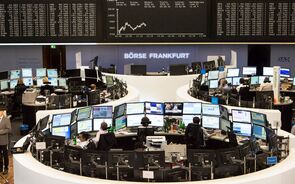

Quedas a chegar - READY for a BEAR MARKET
Eu acho engraçado este argumento que se anda a utilizar :
"Cuidado que as Bolsas estão em máximos !"
Vamos lá a ver :
1 - A Bolsa Portuguesa não está em máximos .
2 - Algumas bolsas estão em máximos . não por causa de uma qualquer bolha técnológica , não por causa de uma qualquer especulação no Petroleo ou outras commodities .Estão porque as empresas apresentam bons resultados e boas perspectivas de futuro .
3 - As Bolsas atingem máximos ?! E depois ?! É suposto andarem sempre a lateralizar ?! É suposto chegarem ao pé de máximos históricos e voltarem pra trás num ciclo infinito !?
É natural que se dê uma correcção . E duas . E três . Agora ...a conversa do "Crash Cataclismico "é um bocado forçada . É possivel . Mas tambem o é um "Anti-Crash " : as Bolsas subirem num dia 30% ! Se se acredita num , porque não se acredita no outro ?! A verosimilhança é a mesma.*
Um abraço ,
The Mechanic
* _ ...mas que ráio é a palavra "verosimilhança" ?!?!
"Cuidado que as Bolsas estão em máximos !"
Vamos lá a ver :
1 - A Bolsa Portuguesa não está em máximos .
2 - Algumas bolsas estão em máximos . não por causa de uma qualquer bolha técnológica , não por causa de uma qualquer especulação no Petroleo ou outras commodities .Estão porque as empresas apresentam bons resultados e boas perspectivas de futuro .
3 - As Bolsas atingem máximos ?! E depois ?! É suposto andarem sempre a lateralizar ?! É suposto chegarem ao pé de máximos históricos e voltarem pra trás num ciclo infinito !?
É natural que se dê uma correcção . E duas . E três . Agora ...a conversa do "Crash Cataclismico "é um bocado forçada . É possivel . Mas tambem o é um "Anti-Crash " : as Bolsas subirem num dia 30% ! Se se acredita num , porque não se acredita no outro ?! A verosimilhança é a mesma.*
Um abraço ,
The Mechanic
* _ ...mas que ráio é a palavra "verosimilhança" ?!?!
" Os que hesitam , são atropelados pela retaguarda" - Stendhal
"É óptimo não se exercer qualquer profissão, pois um homem livre não deve viver para servir outro "
- Aristoteles
http://theflyingmechanic.blogspot.com/
"É óptimo não se exercer qualquer profissão, pois um homem livre não deve viver para servir outro "
- Aristoteles
http://theflyingmechanic.blogspot.com/
-

- Mensagens: 4564
- Registado: 16/12/2004 15:48
- Localização: Sintra
Mais um alerta, desta vez de noutros hermanos:
Cumps[/quote]
citação JN:Solbes recomenda aos espanhóis prudência no investimento em bolsa
O vice-presidente do Governo espanhol e Ministro da Economia e das Finanças, recomendou hoje à população espanhola que efectue os seus investimentos na bolsa espanhola com “prudência”, já que as acções estão nesta altura a negociar em níveis históricos.
Cumps[/quote]
- Mensagens: 88
- Registado: 29/12/2006 17:12
- Localização: Lisboa-algures no ghetto
Quedas a chegar - READY for a BEAR MARKET
Are you ready for a ... Bear market?
Wall Street has had an extended run upward in the last few years, but history shows it isn't likely to last; some experts say it may be time to diversify before the next major correction
By Jonathan Burton
MarketWatch
SAN FRANCISCO — This stock market has been a lonely bull.
Stocks usually aren't so generous for so long. The Dow Jones Industrial Average has gone without a 2 percent decline for seven months, the longest stretch since 1954, and it's been about four years since either the Dow or the Standard & Poor's 500-stock index suffered a 10 percent correction, which is only the second time that's happened, according to Ned Davis Research.
This latest unbroken bull run makes some strategists uneasy. "People aren't expecting any kind of shock," said Brian Gendreau, investment strategist at ING Investment Management.
High levels of borrowing and low trading volatility make stocks more vulnerable, he adds. So when some unexpected bad news rattles the stock market, as it inevitably will, "You're going to get a pretty large market reaction."
Yet even novice investors know the market is a give-and-take world. Stocks can be volatile, but when prepared for a market downturn, it's easier to weather without so much of the stomach-churning panic.
Defensive diversification
The best defense, financial advisers say, is to establish a diversified allocation based on your own investment goals and stick to it, such as by rebalancing your portfolio annually. It may be painful to cut back on stocks when they've been rallying, but it will keep you on the right road.
And if you don't want to sell stocks, adding new money to unrelated assets such as bonds or real estate can achieve the same risk-adjusting goal.
"A well-diversified portfolio allows an investor to hold to their discipline," said Kevin Gahagan, a principal at Mosaic Financial Partners in San Francisco. Broadly invested portfolios tend to lose less in a stock-market downturn and will recover faster, he adds.
It's easy, however, to get optimistic about holdings that may not be diversified well enough. After a very strong performance in the late 1990s, index funds tracking the S&P 500 looked to some as if they would provide all the diversity needed — until the 2000-2002 bear market erased nearly 50 percent of the S&P's value.
That alone should be enough to keep people from concentrating portfolios in just a few areas. But several years of steady gains without major market swings can give the impression that stocks are "safe" and invite complacency.
"People remember the peak pain of the decline, but more recently things have been getting better, so that counters it," said Meir Statman, a finance professor at California's University of Santa Clara who studies investor behavior.
"The last three years have been a very good run; maybe it's time to take a little off the table," said Michael Kuziw, a vice-president at investment manager Lenox Advisors in New York.
That firm, as a rule, realigns client portfolios to their original target exposures to stocks and other asset types. Among stocks, the firm now favors shares of larger U.S. and international companies and has trimmed exposure to midsize U.S. stocks and emerging markets.
"We'll never be afraid to take some gains and reallocate to either underperforming or more conservative asset classes," Kuziw said.
Playing favorites
Before the pressure of falling prices arrives is also the time to take a close look at favorites. It's easy to become attached to winning stocks, and sometimes even harder to say goodbye if they turn south. But a stock doesn't know you own it, and doesn't care if you win or lose.
Gahagan recalls a client who came to the firm with a large amount of his net worth tied up in highly appreciated shares of communications-equipment provider Nortel Networks Corp.
The financial adviser says that despite warnings about concentrating in a single stock, the investor found it difficult to part with his shares — even as the price fell sharply.
Anchoring yourself to a stock can be a fast trip to the bottom. "Our advice to clients is to reposition," Gahagan said. Stocks "don't always get back to even."
Unsure whether to hold a stock or unload it? Ask yourself what Gahagan does of clients: Suppose the value of your shares has grown to $50,000; well done, but if you were given $50,000 today, would you put it all into this stock?
Most often, he observes, the answer is no. "What that says is I would take a more diversified approach," Gahagan noted.
Stocks on sale
And when that inevitable retreat occurs, what do you do then?
If you're too heavily exposed to stocks when a bull market turns, you'll face a tough financial and emotional test of those long-term plans.
"People overestimate their willingness to experience market declines," Gahagan said. "But when they see a decline in portfolio value, they have a very different reaction. They make the wrong decision at the wrong time, for the wrong reasons, and that is 'I've got to get out of the market while I still have something left.' "
Panicked selling may be an understandable reaction, but you have to resist, says John Markese, president of the American Association of Individual Investors.
Many investors, he said, "overcorrect and put the portfolio into a skid. If you do have a decline, don't suddenly sell stocks and go to bonds."
Indeed, perhaps the biggest mistake that investors make, especially those with longer time frames, is not committing to buy stocks at newly reduced prices.
Said Kacy Gott, a principal at financial adviser Kochis Fitz in San Francisco: "An 8 percent to 10 percent correction should be viewed as a sale on stocks. We are confident that stocks will be higher 20 years from now. Investors are just getting a short-term opportunity to buy in at a lower price."

Wall Street has had an extended run upward in the last few years, but history shows it isn't likely to last; some experts say it may be time to diversify before the next major correction
By Jonathan Burton
MarketWatch
SAN FRANCISCO — This stock market has been a lonely bull.
Stocks usually aren't so generous for so long. The Dow Jones Industrial Average has gone without a 2 percent decline for seven months, the longest stretch since 1954, and it's been about four years since either the Dow or the Standard & Poor's 500-stock index suffered a 10 percent correction, which is only the second time that's happened, according to Ned Davis Research.
This latest unbroken bull run makes some strategists uneasy. "People aren't expecting any kind of shock," said Brian Gendreau, investment strategist at ING Investment Management.
High levels of borrowing and low trading volatility make stocks more vulnerable, he adds. So when some unexpected bad news rattles the stock market, as it inevitably will, "You're going to get a pretty large market reaction."
Yet even novice investors know the market is a give-and-take world. Stocks can be volatile, but when prepared for a market downturn, it's easier to weather without so much of the stomach-churning panic.
Defensive diversification
The best defense, financial advisers say, is to establish a diversified allocation based on your own investment goals and stick to it, such as by rebalancing your portfolio annually. It may be painful to cut back on stocks when they've been rallying, but it will keep you on the right road.
And if you don't want to sell stocks, adding new money to unrelated assets such as bonds or real estate can achieve the same risk-adjusting goal.
"A well-diversified portfolio allows an investor to hold to their discipline," said Kevin Gahagan, a principal at Mosaic Financial Partners in San Francisco. Broadly invested portfolios tend to lose less in a stock-market downturn and will recover faster, he adds.
It's easy, however, to get optimistic about holdings that may not be diversified well enough. After a very strong performance in the late 1990s, index funds tracking the S&P 500 looked to some as if they would provide all the diversity needed — until the 2000-2002 bear market erased nearly 50 percent of the S&P's value.
That alone should be enough to keep people from concentrating portfolios in just a few areas. But several years of steady gains without major market swings can give the impression that stocks are "safe" and invite complacency.
"People remember the peak pain of the decline, but more recently things have been getting better, so that counters it," said Meir Statman, a finance professor at California's University of Santa Clara who studies investor behavior.
"The last three years have been a very good run; maybe it's time to take a little off the table," said Michael Kuziw, a vice-president at investment manager Lenox Advisors in New York.
That firm, as a rule, realigns client portfolios to their original target exposures to stocks and other asset types. Among stocks, the firm now favors shares of larger U.S. and international companies and has trimmed exposure to midsize U.S. stocks and emerging markets.
"We'll never be afraid to take some gains and reallocate to either underperforming or more conservative asset classes," Kuziw said.
Playing favorites
Before the pressure of falling prices arrives is also the time to take a close look at favorites. It's easy to become attached to winning stocks, and sometimes even harder to say goodbye if they turn south. But a stock doesn't know you own it, and doesn't care if you win or lose.
Gahagan recalls a client who came to the firm with a large amount of his net worth tied up in highly appreciated shares of communications-equipment provider Nortel Networks Corp.
The financial adviser says that despite warnings about concentrating in a single stock, the investor found it difficult to part with his shares — even as the price fell sharply.
Anchoring yourself to a stock can be a fast trip to the bottom. "Our advice to clients is to reposition," Gahagan said. Stocks "don't always get back to even."
Unsure whether to hold a stock or unload it? Ask yourself what Gahagan does of clients: Suppose the value of your shares has grown to $50,000; well done, but if you were given $50,000 today, would you put it all into this stock?
Most often, he observes, the answer is no. "What that says is I would take a more diversified approach," Gahagan noted.
Stocks on sale
And when that inevitable retreat occurs, what do you do then?
If you're too heavily exposed to stocks when a bull market turns, you'll face a tough financial and emotional test of those long-term plans.
"People overestimate their willingness to experience market declines," Gahagan said. "But when they see a decline in portfolio value, they have a very different reaction. They make the wrong decision at the wrong time, for the wrong reasons, and that is 'I've got to get out of the market while I still have something left.' "
Panicked selling may be an understandable reaction, but you have to resist, says John Markese, president of the American Association of Individual Investors.
Many investors, he said, "overcorrect and put the portfolio into a skid. If you do have a decline, don't suddenly sell stocks and go to bonds."
Indeed, perhaps the biggest mistake that investors make, especially those with longer time frames, is not committing to buy stocks at newly reduced prices.
Said Kacy Gott, a principal at financial adviser Kochis Fitz in San Francisco: "An 8 percent to 10 percent correction should be viewed as a sale on stocks. We are confident that stocks will be higher 20 years from now. Investors are just getting a short-term opportunity to buy in at a lower price."
- Mensagens: 493
- Registado: 26/2/2006 10:26
Quem está ligado:
Utilizadores a ver este Fórum: Ano nimus, belinho2, Google [Bot], Google Adsense [Bot], iniciado1, Investor Tuga, KAWA, Kiko_463, Kooc, m-m, peterteam2 e 62 visitantes