
Empresa estatal angolana diamantes quer ser cotada na Bolsa
9 mensagens
|Página 1 de 1
É sempre bom termos causas nas quais acreditemos. Melhor ainda é se nos mantivermos actualizados sobre a evolução dos conflitos, coiso e tal...
Ora bem. A notícia não deixa de ser interessante e está na mesma linha da Sonangol "mãe" que procura igualmente cotar-se outdoors (fala-se em JNB ou Londres).
Quanto à Bolsa de Luanda, há-de chegar o dia... Mas qual o grande interesse numa bolsa local quando se fala de empresas de pequena dimensão, com as grandes a ambicionarem IPOs no estrangeiro e deixarem para os de cá subsidiárias pouco interessantes?
Um abraço,
MozHawk
Ora bem. A notícia não deixa de ser interessante e está na mesma linha da Sonangol "mãe" que procura igualmente cotar-se outdoors (fala-se em JNB ou Londres).
Quanto à Bolsa de Luanda, há-de chegar o dia... Mas qual o grande interesse numa bolsa local quando se fala de empresas de pequena dimensão, com as grandes a ambicionarem IPOs no estrangeiro e deixarem para os de cá subsidiárias pouco interessantes?
Um abraço,
MozHawk
-

- Mensagens: 2809
- Registado: 25/10/2002 10:08
- Localização: Lisboa
de beers= Blood Dimands
CONFLICT DIAMONDS
General Assembly adopts resolution on "conflict diamonds"
Crucial issue in fuelling wars
On 1 December 2000, the United Nations General Assembly adopted, unanimously, a resolution on the role of diamonds in fuelling conflict, breaking the link between the illicit transaction of rough diamonds and armed conflict, as a contribution to prevention and settlement of conflicts (A/RES/55/56). In taking up this agenda item, the General Assembly recognized that conflict diamonds are a crucial factor in prolonging brutal wars in parts of Africa, and underscored that legitimate diamonds contribute to prosperity and development elsewhere on the continent. In Angola and Sierra Leone, conflict diamonds continue to fund the rebel groups, the National Union for the Total Independence of Angola (UNITA) and the Revolutionary United Front (RUF), both of which are acting in contravention of the international community's objectives of restoring peace in the two countries.
What is a conflict diamond?
Conflict diamonds are diamonds that originate from areas controlled by forces or factions opposed to legitimate and internationally recognized governments, and are used to fund military action in opposition to those governments, or in contravention of the decisions of the Security Council.
"It has been said that war is the price of peace… Angola and Sierra Leone have already paid too much. Let them live a better life."
Ambassador Juan Larrain, Chairman of the Monitoring Mechanism on sanctions against UNITA.
How can a conflict diamond be distinguished from a legitimate diamond?
A well-structured 'Certificate of Origin' regime can be an effective way of ensuring that only legitimate diamonds -- that is, those from government-controlled areas -- reach market. Additional controls by Member States and the diamond industry are needed to ensure that such a regime is effective. These measures might include the standardization of the certificate among diamond exporting countries, transparency, auditing and monitoring of the regime and new legislation against those who fail to comply.
"Diamonds are forever" it is often said. But lives are not.
We must spare people the ordeal of war, mutilations and death for the sake of conflict diamonds."
Martin Chungong Ayafor, Chairman of the Sierra Leone Panel of Experts
.
Fuelling wars
Rough diamond caches have often been used by rebel forces to finance arms purchases and other illegal activities. Neighbouring and other countries can be used as trading and transit grounds for illicit diamonds. Once diamonds are brought to market, their origin is difficult to trace and once polished, they can no longer be identified.
Who needs to take action?
Governments, inter-governmental and non-governmental organizations, diamond traders, financial institutions, arms manufacturers, social and educational institutions and other civil society players need to combine their efforts, demand the strict enforcement of sanctions and encourage real peace. The horrific atrocities in Sierra Leone and the long suffering of the people of Angola have heightened the international community's awareness of the need to cut off sources of funding for the rebels in order to promote lasting peace in those countries; such an opportunity cannot be wasted.
Legitimate Diamonds Peace Development
--------------------------------------------------------------------------------
Controls on conflict diamonds cut off sources of funding for rebels, help shorten wars and prevent their recurrence.
Peace in diamond producing regions will bring about the potential for economic development and tax revenue for building infrastructure as legitimate mining ventures increase.
The international diamond industry is already taking steps to respond, such as the adoption by the World Diamond Congress, Antwerp, 19 July 2000, of a resolution which, if fully implemented, stands to increase the diamond industry's ability to block conflict diamonds from reaching market. Other efforts include the launching, at the initiative of African diamond-producing countries, of an inclusive, worldwide consultation process of Governments, industry and civil society, referred to as the Kimberly Process, to devise an effective response to the problem of conflict diamonds.
What is the United Nations doing?
The tragic conflicts in Angola and Sierra Leone, fuelled by illicit diamond smuggling, have already led to action by the Security Council. Under Chapter VII of the United Nations Charter, targeted sanctions have been applied against UNITA in Angola and the Sierra Leone rebels, including a ban on their main source of funding -- illicit diamonds. Diamond sanctions have also been applied against Liberia but are not yet in effect.
ANGOLA:
Following UNITA's rejection of the results of the United Nations monitored election in 1992, the Security Council, acting under Chapter VII of the United Nations Charter, adopted resolution 864 of 15 September 1993, imposing an arms embargo along with petroleum sanctions against UNITA and establishing a Sanctions Committee consisting of all the members of the Council to monitor and report on the implementation of the mandatory measures.
Following the signing of the 1994 Lusaka Protocol, UNITA refused to comply with its terms. In response to UNITA's refusal to disarm and implement the Lusaka Protocol, the Security Council adopted resolution 1127 of 28 August 1997, which imposed mandatory travel sanctions on senior UNITA officials and their immediate family members. A year later, the Security Council adopted resolution 1173 of 12 June 1998 and resolution 1176 of 24 June 1998, prohibiting the direct or indirect import from Angola to their territory of all diamonds not controlled through the Certificate of Origin issued by the Government of Angola, as well as imposing financial sanctions on UNITA.
By resolution 1237 of 7 May 1999, the Security Council established an independent Panel of Experts to investigate violations of Security Council sanctions against UNITA. Following the publication of the Panel's report (document S/2000/203), the Security Council adopted resolution 1295 of 18 April 2000, by which the Panel's recommendations were taken up and a "Monitoring Mechanism" was established to collect additional information and investigate any relevant leads regarding sanctions violations, with a view to enhancing the implementation of the measures imposed on UNITA. The five expert members were its Chairman, Ambassador Juan Larrain (Chile), Christine Gordon (United Kingdom), James Manzou (Zimbabwe), Ismaila Seck (Senegal) and Ambassador Lena Sundh (Sweden). The Mechanism submitted its report to the Committee on 20 December 2000 (S/2000/1225). By resolution 1336 (2001), the Security Council extended the mandate of the Monitoring Mechanism for a period of three months. On 20 February 2001, the Security Council held an open meeting to discuss the report of the Monitoring Mechanism.
SIERRA LEONE:
In July 1999, following over eight years of civil conflict, negotiations between the Government of Sierra Leone and the Revolutionary United Front led to the signing of the Lome Peace Agreement under which the parties agreed to the cessation of hostilities, disarmament of all combatants and the formation of a government of national unity. The United Nations and the Economic Community of West African States (ECOWAS) helped facilitate the negotiations. In resolution 1270 of 22 October 1999, the Security Council established the United Nations Mission in Sierra Leone (UNAMSIL) to help create the conditions in which the parties could implement the Agreement. Subsequently, the number of personnel were increased and tasks to be carried out by UNAMSIL adjusted by the Council in resolutions 1289 of 7 February 2000 and 1299 of 19 May 2000, making UNAMSIL the largest peacekeeping force currently deployed by the United Nations.
Following international concern at the role played by the illicit diamond trade in fuelling conflict in Sierra Leone, the Security Council adopted resolution 1306 on 5 July 2000 imposing a ban on the direct or indirect import of rough diamonds from Sierra Leone not controlled by the Government of Sierra Leone through a Certificate of Origin regime. An arms embargo and selective travel ban on non-governmental forces were already in effect under resolution 1171 of 5 June 1998.
On 31 July and 1 August 2000, Ambassador Anwarul Karim Chowdhury, Chairman of the Security Council Committee established pursuant to resolution 1132 (1997) concerning Sierra Leone, presided over the first ever exploratory public hearing by the Security Council in New York. The hearing was attended by representatives of interested Member States, regional organizations, non-governmental organizations, the diamond industry and other relevant experts. The hearing exposed the link between the trade in illicit Sierra Leone diamonds and trade in arms and related materiel. The ways and means for developing a sustainable and well-regulated diamond industry in Sierra Leone were also discussed.
As called for by resolution 1306 of 5 July 2000, the Secretary-General, on 2 August 2000, established a Panel of Experts, to collect information on possible violations of the arms embargo and the link between trade in diamonds and trade in arms and related materiel, consider the adequacy of air traffic control systems in the West African region for the purpose of detecting flights suspected of contravening the arms embargo, and report to the Council with observations and recommendations on ways of strengthening the arms and diamonds embargoes no later than 31 October 2000. The Chairman of the Panel was Martin Chungong Ayafor (Cameroon). The other members were Atabou Bodian (Senegal), Johan Peleman (Belgium), Harjit Singh Sandhu (India) and Ian Smillie (Canada). The Panel submitted its report to the Security Council on 19 December 2000 (S/2000/1195). On 25 January 2001 the Security Council, at its 4264th meeting, considered the report of the panel of experts.
LIBERIA:
Following the findings presented in the Sierra Leone Panel of Experts' report that the illicit trade in diamonds from Sierra Leone could not be conducted without the permission and involvement of the Liberian government officials, and that the Government of Liberia was actively supporting the RUF at the highest levels, the Security Council adopted resolution 1343 of 7 March 2001. By this resolution, a new Sanctions Committee of the Security Council was established, an arms embargo was re-applied and a Panel of Experts was mandated for a period of six months. In addition, the resolution indicated that if the Government of Liberia does not meet the demands specified by the Security Council within two months, all States would be mandated to take the necessary measures to prevent the direct or indirect import of all rough diamonds from Liberia, whether or not such diamonds originated in Liberia, and a selective travel ban would be imposed.
For further information please contact
Anna Frangipani Campino, Sanctions Branch,
Security Council Affairs Division, Department of Political Affairs
United Nations, New York 10017, Tel.(212) 963 5832
Published by the United Nations Department of Public Information
in cooperation with the Sanctions Branch, Security Council Affairs Division, Department of Political Affairs.
Updated 21 March 2001
General Assembly adopts resolution on "conflict diamonds"
Crucial issue in fuelling wars
On 1 December 2000, the United Nations General Assembly adopted, unanimously, a resolution on the role of diamonds in fuelling conflict, breaking the link between the illicit transaction of rough diamonds and armed conflict, as a contribution to prevention and settlement of conflicts (A/RES/55/56). In taking up this agenda item, the General Assembly recognized that conflict diamonds are a crucial factor in prolonging brutal wars in parts of Africa, and underscored that legitimate diamonds contribute to prosperity and development elsewhere on the continent. In Angola and Sierra Leone, conflict diamonds continue to fund the rebel groups, the National Union for the Total Independence of Angola (UNITA) and the Revolutionary United Front (RUF), both of which are acting in contravention of the international community's objectives of restoring peace in the two countries.
What is a conflict diamond?
Conflict diamonds are diamonds that originate from areas controlled by forces or factions opposed to legitimate and internationally recognized governments, and are used to fund military action in opposition to those governments, or in contravention of the decisions of the Security Council.
"It has been said that war is the price of peace… Angola and Sierra Leone have already paid too much. Let them live a better life."
Ambassador Juan Larrain, Chairman of the Monitoring Mechanism on sanctions against UNITA.
How can a conflict diamond be distinguished from a legitimate diamond?
A well-structured 'Certificate of Origin' regime can be an effective way of ensuring that only legitimate diamonds -- that is, those from government-controlled areas -- reach market. Additional controls by Member States and the diamond industry are needed to ensure that such a regime is effective. These measures might include the standardization of the certificate among diamond exporting countries, transparency, auditing and monitoring of the regime and new legislation against those who fail to comply.
"Diamonds are forever" it is often said. But lives are not.
We must spare people the ordeal of war, mutilations and death for the sake of conflict diamonds."
Martin Chungong Ayafor, Chairman of the Sierra Leone Panel of Experts
.
Fuelling wars
Rough diamond caches have often been used by rebel forces to finance arms purchases and other illegal activities. Neighbouring and other countries can be used as trading and transit grounds for illicit diamonds. Once diamonds are brought to market, their origin is difficult to trace and once polished, they can no longer be identified.
Who needs to take action?
Governments, inter-governmental and non-governmental organizations, diamond traders, financial institutions, arms manufacturers, social and educational institutions and other civil society players need to combine their efforts, demand the strict enforcement of sanctions and encourage real peace. The horrific atrocities in Sierra Leone and the long suffering of the people of Angola have heightened the international community's awareness of the need to cut off sources of funding for the rebels in order to promote lasting peace in those countries; such an opportunity cannot be wasted.
Legitimate Diamonds Peace Development
--------------------------------------------------------------------------------
Controls on conflict diamonds cut off sources of funding for rebels, help shorten wars and prevent their recurrence.
Peace in diamond producing regions will bring about the potential for economic development and tax revenue for building infrastructure as legitimate mining ventures increase.
The international diamond industry is already taking steps to respond, such as the adoption by the World Diamond Congress, Antwerp, 19 July 2000, of a resolution which, if fully implemented, stands to increase the diamond industry's ability to block conflict diamonds from reaching market. Other efforts include the launching, at the initiative of African diamond-producing countries, of an inclusive, worldwide consultation process of Governments, industry and civil society, referred to as the Kimberly Process, to devise an effective response to the problem of conflict diamonds.
What is the United Nations doing?
The tragic conflicts in Angola and Sierra Leone, fuelled by illicit diamond smuggling, have already led to action by the Security Council. Under Chapter VII of the United Nations Charter, targeted sanctions have been applied against UNITA in Angola and the Sierra Leone rebels, including a ban on their main source of funding -- illicit diamonds. Diamond sanctions have also been applied against Liberia but are not yet in effect.
ANGOLA:
Following UNITA's rejection of the results of the United Nations monitored election in 1992, the Security Council, acting under Chapter VII of the United Nations Charter, adopted resolution 864 of 15 September 1993, imposing an arms embargo along with petroleum sanctions against UNITA and establishing a Sanctions Committee consisting of all the members of the Council to monitor and report on the implementation of the mandatory measures.
Following the signing of the 1994 Lusaka Protocol, UNITA refused to comply with its terms. In response to UNITA's refusal to disarm and implement the Lusaka Protocol, the Security Council adopted resolution 1127 of 28 August 1997, which imposed mandatory travel sanctions on senior UNITA officials and their immediate family members. A year later, the Security Council adopted resolution 1173 of 12 June 1998 and resolution 1176 of 24 June 1998, prohibiting the direct or indirect import from Angola to their territory of all diamonds not controlled through the Certificate of Origin issued by the Government of Angola, as well as imposing financial sanctions on UNITA.
By resolution 1237 of 7 May 1999, the Security Council established an independent Panel of Experts to investigate violations of Security Council sanctions against UNITA. Following the publication of the Panel's report (document S/2000/203), the Security Council adopted resolution 1295 of 18 April 2000, by which the Panel's recommendations were taken up and a "Monitoring Mechanism" was established to collect additional information and investigate any relevant leads regarding sanctions violations, with a view to enhancing the implementation of the measures imposed on UNITA. The five expert members were its Chairman, Ambassador Juan Larrain (Chile), Christine Gordon (United Kingdom), James Manzou (Zimbabwe), Ismaila Seck (Senegal) and Ambassador Lena Sundh (Sweden). The Mechanism submitted its report to the Committee on 20 December 2000 (S/2000/1225). By resolution 1336 (2001), the Security Council extended the mandate of the Monitoring Mechanism for a period of three months. On 20 February 2001, the Security Council held an open meeting to discuss the report of the Monitoring Mechanism.
SIERRA LEONE:
In July 1999, following over eight years of civil conflict, negotiations between the Government of Sierra Leone and the Revolutionary United Front led to the signing of the Lome Peace Agreement under which the parties agreed to the cessation of hostilities, disarmament of all combatants and the formation of a government of national unity. The United Nations and the Economic Community of West African States (ECOWAS) helped facilitate the negotiations. In resolution 1270 of 22 October 1999, the Security Council established the United Nations Mission in Sierra Leone (UNAMSIL) to help create the conditions in which the parties could implement the Agreement. Subsequently, the number of personnel were increased and tasks to be carried out by UNAMSIL adjusted by the Council in resolutions 1289 of 7 February 2000 and 1299 of 19 May 2000, making UNAMSIL the largest peacekeeping force currently deployed by the United Nations.
Following international concern at the role played by the illicit diamond trade in fuelling conflict in Sierra Leone, the Security Council adopted resolution 1306 on 5 July 2000 imposing a ban on the direct or indirect import of rough diamonds from Sierra Leone not controlled by the Government of Sierra Leone through a Certificate of Origin regime. An arms embargo and selective travel ban on non-governmental forces were already in effect under resolution 1171 of 5 June 1998.
On 31 July and 1 August 2000, Ambassador Anwarul Karim Chowdhury, Chairman of the Security Council Committee established pursuant to resolution 1132 (1997) concerning Sierra Leone, presided over the first ever exploratory public hearing by the Security Council in New York. The hearing was attended by representatives of interested Member States, regional organizations, non-governmental organizations, the diamond industry and other relevant experts. The hearing exposed the link between the trade in illicit Sierra Leone diamonds and trade in arms and related materiel. The ways and means for developing a sustainable and well-regulated diamond industry in Sierra Leone were also discussed.
As called for by resolution 1306 of 5 July 2000, the Secretary-General, on 2 August 2000, established a Panel of Experts, to collect information on possible violations of the arms embargo and the link between trade in diamonds and trade in arms and related materiel, consider the adequacy of air traffic control systems in the West African region for the purpose of detecting flights suspected of contravening the arms embargo, and report to the Council with observations and recommendations on ways of strengthening the arms and diamonds embargoes no later than 31 October 2000. The Chairman of the Panel was Martin Chungong Ayafor (Cameroon). The other members were Atabou Bodian (Senegal), Johan Peleman (Belgium), Harjit Singh Sandhu (India) and Ian Smillie (Canada). The Panel submitted its report to the Security Council on 19 December 2000 (S/2000/1195). On 25 January 2001 the Security Council, at its 4264th meeting, considered the report of the panel of experts.
LIBERIA:
Following the findings presented in the Sierra Leone Panel of Experts' report that the illicit trade in diamonds from Sierra Leone could not be conducted without the permission and involvement of the Liberian government officials, and that the Government of Liberia was actively supporting the RUF at the highest levels, the Security Council adopted resolution 1343 of 7 March 2001. By this resolution, a new Sanctions Committee of the Security Council was established, an arms embargo was re-applied and a Panel of Experts was mandated for a period of six months. In addition, the resolution indicated that if the Government of Liberia does not meet the demands specified by the Security Council within two months, all States would be mandated to take the necessary measures to prevent the direct or indirect import of all rough diamonds from Liberia, whether or not such diamonds originated in Liberia, and a selective travel ban would be imposed.
For further information please contact
Anna Frangipani Campino, Sanctions Branch,
Security Council Affairs Division, Department of Political Affairs
United Nations, New York 10017, Tel.(212) 963 5832
Published by the United Nations Department of Public Information
in cooperation with the Sanctions Branch, Security Council Affairs Division, Department of Political Affairs.
Updated 21 March 2001
- Anexos
-
- mapcopy.gif (52.51 KiB) Visualizado 720 vezes
-
- boyguncopy.gif (47.1 KiB) Visualizado 727 vezes
-
- boyguncopy.gif (47.1 KiB) Visualizado 731 vezes
-
- boy4copy.gif (36.28 KiB) Visualizado 726 vezes
scuba
Fear blind us the opportunity, greed blind us the danger!
Fear blind us the opportunity, greed blind us the danger!
- Mensagens: 1300
- Registado: 10/11/2002 1:03
- Localização: 24

No inicio de 2006 falou-se em fim de 2006 e depois deixou de se falar. Em Agosto saiu esta noticia, que me fez acreditar que poderia haver luz ao fundo do túnel, mas diissipou-se.
Mais ainda agora que a Endiama vai cotar fora. A bolsa em Luanda creio que vai ser um projecto a longo prazo.
Colocada: 2006-08-24 08:12 Assunto:
--------------------------------------------------------------------------------
Susana Domingos
sdomingos@mediafin.pt
As orientações do Ministério das Finanças de Angola para a abertura da Bolsa de Valores do país apontam para que o novo mercado, sedeado em Luanda, entre em funcionamento com 10 empresas cotadas. No entanto, é possível que a praça venha a estrear com apenas duas cotadas.
«Se conseguir listar duas empresas é muito positivo», afirmou ao Jornal de Negócios Zacarias Neto, presidente indigitado do novo mercado de capitais do país africano. «Não precisamos de ter um leque muito abrangente de empresas, porque não há aqui um problema de liquidez», explicou o responsável, adiantando que, além do segmento de renda variável, a bolsa irá apostar também no segmento de renda fixa, com a negociação de títulos de dívida pública.
A Bolsa de Angola foi formalmente constituída a 16 de Março deste ano, com um capital social de 12,3 milhões de euros, distribuídos por cerca de 20 accionistas, entre os quais se encontra o Banco Fomento de Angola, pertencente ao BPI, e o Millennium Angola, detido pelo banco português Millennium bcp, que deterá uma posição de 2% no capital da bolsa, assegurou fonte focial da instituição.
Mais ainda agora que a Endiama vai cotar fora. A bolsa em Luanda creio que vai ser um projecto a longo prazo.
Colocada: 2006-08-24 08:12 Assunto:
--------------------------------------------------------------------------------
Susana Domingos
sdomingos@mediafin.pt
As orientações do Ministério das Finanças de Angola para a abertura da Bolsa de Valores do país apontam para que o novo mercado, sedeado em Luanda, entre em funcionamento com 10 empresas cotadas. No entanto, é possível que a praça venha a estrear com apenas duas cotadas.
«Se conseguir listar duas empresas é muito positivo», afirmou ao Jornal de Negócios Zacarias Neto, presidente indigitado do novo mercado de capitais do país africano. «Não precisamos de ter um leque muito abrangente de empresas, porque não há aqui um problema de liquidez», explicou o responsável, adiantando que, além do segmento de renda variável, a bolsa irá apostar também no segmento de renda fixa, com a negociação de títulos de dívida pública.
A Bolsa de Angola foi formalmente constituída a 16 de Março deste ano, com um capital social de 12,3 milhões de euros, distribuídos por cerca de 20 accionistas, entre os quais se encontra o Banco Fomento de Angola, pertencente ao BPI, e o Millennium Angola, detido pelo banco português Millennium bcp, que deterá uma posição de 2% no capital da bolsa, assegurou fonte focial da instituição.
- Mensagens: 3158
- Registado: 17/7/2006 16:09
- Localização: Cascais
Barra Escreveu:Diamantes há, ideias também.
Estas estão é "um pouco confusas" como diz a Floribela.
E para quando a Bolsa Angolana ?
Confesso não sei onde, mas juro que li ser este o ano do ínicio da Bolsa Angola, nunca mais obtive informação, também é certo que nunca mais pesquisei...

Cumps
Fanhecas

Aproveitar as descidas e curtir as subidas
- Mensagens: 254
- Registado: 26/5/2006 17:58
Eu tb achei um pouco confuso o texto enfim...
A ideia da criação de um portfólio parece-me tardia, bem como uma medida adequada de Marketing, aqui estou mesmo à vontade para falar.
Um pequeno monstro (Falo de Angola!) que parece querer acordar, eu se fosse alguém com poder ao nível Nacional tomaria as devidas posições, para que não nos lamentamos mais tarde, como aconteceu na Índia onde até já a língua Francesa nos ultrapassou em preferência.
Acordemos a tempo, pelo menos desta vez...se não for pedir muito.
Cumps
Fanhecas
A ideia da criação de um portfólio parece-me tardia, bem como uma medida adequada de Marketing, aqui estou mesmo à vontade para falar.
Um pequeno monstro (Falo de Angola!) que parece querer acordar, eu se fosse alguém com poder ao nível Nacional tomaria as devidas posições, para que não nos lamentamos mais tarde, como aconteceu na Índia onde até já a língua Francesa nos ultrapassou em preferência.
Acordemos a tempo, pelo menos desta vez...se não for pedir muito.
Cumps
Fanhecas
Aproveitar as descidas e curtir as subidas
- Mensagens: 254
- Registado: 26/5/2006 17:58
Não percebi.
"... planeia entrar para a bolsa de Londres ou Toronto...."
"...director de "marketing" da Endiama, revelou ontem que a empresa está a planear a sua entrada na bolsa de Londres ou de Nova Iorque ..."
"...A produção angolana de diamantes caiu de 7,1 milhões de quilates, em 2005, para os 9,3 milhões em 2006..."
"...A Endiana revelou ainda que a partir do próximo mês de Junho, a forma como o seu departamento de marketing tem operado vai ser alterada..."
Bem precisa. :twisted
"... planeia entrar para a bolsa de Londres ou Toronto...."
"...director de "marketing" da Endiama, revelou ontem que a empresa está a planear a sua entrada na bolsa de Londres ou de Nova Iorque ..."
"...A produção angolana de diamantes caiu de 7,1 milhões de quilates, em 2005, para os 9,3 milhões em 2006..."
"...A Endiana revelou ainda que a partir do próximo mês de Junho, a forma como o seu departamento de marketing tem operado vai ser alterada..."
Bem precisa. :twisted
-

- Mensagens: 51
- Registado: 12/12/2006 11:12
- Localização: Porto
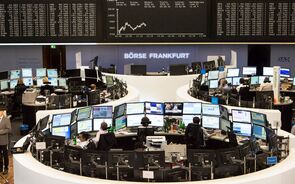
Empresa estatal angolana diamantes quer ser cotada na Bolsa
Empresa estatal angolana de diamantes quer ser cotada em Londres ou Toronto
A Endiama, empresa estatal angolana de diamantes, planeia entrar para a bolsa de Londres ou Toronto. A empresa contratou a Morgan Stanley para a aconselhar em qual dos mercados é preferível dispersar capital.
Ana Luísa Marques
anamarques@mediafin.pt
A Endiama, empresa estatal angolana de diamantes, planeia entrar para a bolsa de Londres ou Toronto. A empresa contratou a Morgan Stanley para a aconselhar em qual dos mercados é preferível dispersar capital.
Segundo o "site" da Miningmax, Sebastião Panzo, director de "marketing" da Endiama, revelou ontem que a empresa está a planear a sua entrada na bolsa de Londres ou de Nova Iorque não tendo, no entanto, adiantado quando é que isto poderá ocorrer.
O encaixe de capital conseguido com a entrada em bolsa, vai ser usado pela empresa angolana para reunir numa base de dados todos os depósitos de diamantes do país e identificar os quimberlites. Até à data, Angola já descobriu cerca mil quimberlites. "Ainda há muito para descobrir no meu país", disse Panzo. "Precisamos urgentemente de actualizar a nossa base de dados geológica e colocar o máximo possível de minas a produzir", adiantou o responsável.
Em 2006, o governo angolano criou um comité de acompanhamento da indústria dos diamantes que tem como função investigar e recomendar alterações para aumentar o investimento neste sector. Este comité, que irá apresentar as primeiras conclusões no próximo mês de Junho, tem sido ajudado pelo Banco Mundial, o grupo russo Alrosa e o maior produtor mundial de diamantes De Beers.
A produção angolana de diamantes caiu de 7,1 milhões de quilates, em 2005, para os 9,3 milhões em 2006. A Endiama espera aumentar este valor até aos 10 milhões em 2010.
A Endiana revelou ainda que a partir do próximo mês de Junho, a forma como o seu departamento de marketing tem operado vai ser alterada. "A partir do segundo semestre deste ano prevemos alterações no sector dos diamantes", disse Sebastião Panzo.
A Endiama, empresa estatal angolana de diamantes, planeia entrar para a bolsa de Londres ou Toronto. A empresa contratou a Morgan Stanley para a aconselhar em qual dos mercados é preferível dispersar capital.
Ana Luísa Marques
anamarques@mediafin.pt
A Endiama, empresa estatal angolana de diamantes, planeia entrar para a bolsa de Londres ou Toronto. A empresa contratou a Morgan Stanley para a aconselhar em qual dos mercados é preferível dispersar capital.
Segundo o "site" da Miningmax, Sebastião Panzo, director de "marketing" da Endiama, revelou ontem que a empresa está a planear a sua entrada na bolsa de Londres ou de Nova Iorque não tendo, no entanto, adiantado quando é que isto poderá ocorrer.
O encaixe de capital conseguido com a entrada em bolsa, vai ser usado pela empresa angolana para reunir numa base de dados todos os depósitos de diamantes do país e identificar os quimberlites. Até à data, Angola já descobriu cerca mil quimberlites. "Ainda há muito para descobrir no meu país", disse Panzo. "Precisamos urgentemente de actualizar a nossa base de dados geológica e colocar o máximo possível de minas a produzir", adiantou o responsável.
Em 2006, o governo angolano criou um comité de acompanhamento da indústria dos diamantes que tem como função investigar e recomendar alterações para aumentar o investimento neste sector. Este comité, que irá apresentar as primeiras conclusões no próximo mês de Junho, tem sido ajudado pelo Banco Mundial, o grupo russo Alrosa e o maior produtor mundial de diamantes De Beers.
A produção angolana de diamantes caiu de 7,1 milhões de quilates, em 2005, para os 9,3 milhões em 2006. A Endiama espera aumentar este valor até aos 10 milhões em 2010.
A Endiana revelou ainda que a partir do próximo mês de Junho, a forma como o seu departamento de marketing tem operado vai ser alterada. "A partir do segundo semestre deste ano prevemos alterações no sector dos diamantes", disse Sebastião Panzo.
Se não podes vencê-los, o melhor mesmo é juntares-te a eles!
Porquê ir contra o mercado? Perdemos sempre!
És fraco, junta-te aos fortes!
Porquê ir contra o mercado? Perdemos sempre!
És fraco, junta-te aos fortes!
-

- Mensagens: 5769
- Registado: 9/11/2005 17:56
- Localização: Lisboa
9 mensagens
|Página 1 de 1
Quem está ligado: